(Sequal to NIGHT TRAIN TO BARCELONA)
On a Spanish morning fifty-eight years ago, in my nineteenth year before God, in a ramshackle European youth hostel, a Danish boy asked me if I liked boys or girls. And my mind, lifted up in a prairie whirwind, instantly flew off to Oz. And I thought: No, Dorothy, you and I are definitely not in Kansas anymore.
But let me begin at the beginning of that particular chapter of my travel chronicles which took place during a serendipitous mere 48-hour visit to the city with the rhapsodic name: Bar-ce-lo-na.
Among other things, I got lost there. It was July, 1966.
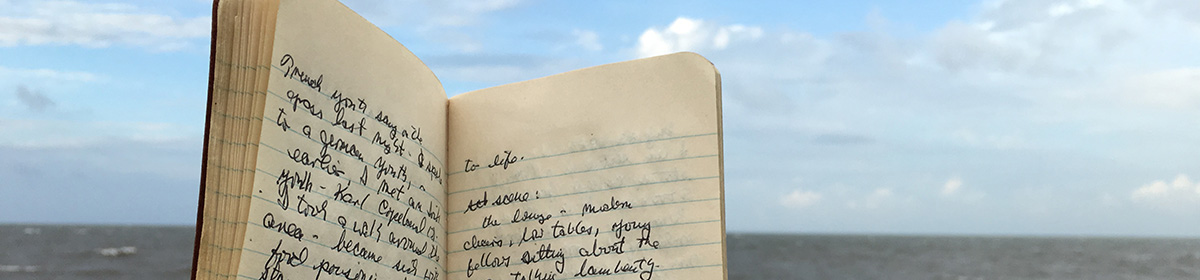
My Continental journey (as recorded in my 19-cent notebook) had brought me to the French-Spanish border.
I wrote :
Night train from Paris. Traveled all night. Awoke in my couchette. We had stopped; light crept under the drawn shade. There were only a few people left in the compartment of six couchettes. The Pyrenees. Baking heat. Arrive at Port-Bou, French-Spanish border. Hungry, I buy a ham sandwich, chips, and a coke in the little station. The gauge of the tracks changes. Therefore I must change trains. The Spanish train bumps rhythmically, slowly, along…clack-clack…clack-clack….Glimpses of the vivid blue Mediterranean. Stony remains on a hillside. They resemble castle ruins. Long, slow, bumpy ride continues. The train was very old. I kept hoping we’d pass by the sea again, but there were only the hills and dusty fields, small villas, seemingly abandoned, sitting in the baking sun. Farmers working the fields with horse-drawn plows, women driving donkey carts over narrow, winding roads.
There’s a young Swede in my compartment. Bound for the home of a wealthy Spanish family. He’ll tutor their young daughter.
…clack-clack…clack-clack….
It’s getting hotter. Barcelona’s poverty-stricken environs roll by. There were dumping areas and factories and rows of shacks. Midday clouds darken crooked rows of scarred, broken rail side houses. Laundry hangs limply from sagging lines, lifts gently in some filthy breeze. Grim factories come next. Odors like cheap perfume, then like medicine. They roll into our open window on waves of hot air. We lurch to rest in the station. It is dark and gloomy. I bid the Swede goodbye and good luck, get a taxi to my youth hostel. I’d written down the address from a hostel directory. Tip the driver. (Grossly over-tipped him. His good fortune. I’m just learning the deal with the Spanish peseta.)
Imagine the Alamo after the siege. That is a tiny exaggeration. But to this day, recalling its stucco exterior and abysmal state, it’s how I remember that hostel on the Avenida Virgen de Monserrat. For about 10 peseta. It was home for two nights.
Once settled, I took a long, long walk, all the way into the center of the city. Evening in Barcelona changed my mood. She glowed as Paris had glowed. I had found one of the central squares where the people, all in all, seemed ripe with Mediterranean amiability and the city itself bustling and happy. Then as evening arrived and the lights came on, I came upon a playground filled with children and their mothers watching over them. Oh, how I would soon need a mother watching over me….
I rode the Metro, walked some more. But I’d failed to take the hostel’s address, or even note its location, except to remember that it was up a hill. Could there be more than one hill in Barcelona? (Dozens, you idiot!)
Darkness found me walking up one hill, down another, lost, my Spanish shamefully limited to “si” and “no”. The word “hostel” meant nothing to anyone I met. The hostel had a curfew. As I walked I began to face a terrible prospect: locked out once I found the hostel, or sleeping on the street. I simply had no idea where I was and, ast noted, I spoke no Spanish.
Rain was threatening as I walked. Two rats pursued one another on a gravel patch. Cat’s eyes gleamed in darkness. People stood in the pallid light of doorways. I pass houses both lavish and poor. Heard a child crying, saw women laughing in a brightly lighted kitchen. Does no one speak English? I saw a couple kissing in the dark. I wasn’t going to bother them. (In my notebook I have written, “the Spanish women and girls are the most beautiful I have ever seen.”)
Some streets were paved, others were dust and dirt. Trolleys squealed slowly down one tree-canopied hillside avenue bearing nuns, priests and children from their visit to the Montserrat Benedictine Abbey and Holy Grotto at the top. (Seeing them, hearing them, I believe I prayed. I was becoming oh, so disoriented, isolated and desperate.)
The rain began, softly. I came upon police lining a wide, bright boulevard. Some dignitary would be passing (was Franco visiting?) I approached one cop; a friendly face under the menacing visor and chin strap. The language barrier frustrated us both. The rain was suddenly heavy. The cop must have directed me to a taxi. My notebook says the (taxi) driver was whistling an American tune. He took me to a police station. A kindly desk sergeant, gesturing, suggested a route. Seems I was mercifully close to my hostel at last. More walking. The rain stopped, another mercy. The streets gleamed.
Finally! I came upon a dark tree-lined passageway. My broken down Alamo of a hostel was at the end of it, looking like Shangri-La to me at that moment. I drank Orange Fanta from a vending machine, found peace and, ultimately, sleep in a bunk bed, though I was preyed on by mosquitoes.
The following night I would wake in darkness to find a leg dangling by my bunk. Someone climbing through a window.
This would be the aforementioned Danish boy.
But that’s another story.
And it will be my next story from those Spanish moments during those long-ago hours in that unforgettable summer of 1966.
 19 Cent Notebook