BLEAK MID-WINTER SUNG POETRY AWAITING SNOW AT THE LAST MILE

“It’s not mid-winter,” I said to Knox, the artist from upstairs, who’d insisted it was.

“It is,” he insisted, with icy adamance.

“Winter’s just a month old astronomically, ” I said. It’s just a month since the Solstice,” I said. “February, that’s mid-winter.”

“I don’t care what the stars say,” he said. “I’m feeling it here on earth.” But he seemed deflated by my failure to yield on the subject, and so, out of respect, I relented. “Maybe it’s mid-winter in our souls,” I said.

I had to admit, wherever we were in winter, it was feeling — bleak.

Knox was sitting over his Blushing Monk. “Have it your way, Wayland. But I’m feeling — bereft. Christmas came and went. I never got to sing my favorite carol — my MID-WINTER carol. Seriouis people sing it at Christmas, mid-winter or not.”

“So you’re going to sing it?”

“I absolutely am,” Knox said.

How about that! Knox was going to sing — and (a little late) sing a Christmas Carol. All I’d ever heard him sing was “Frosty The Snowman.”

A big bad storm was sweeping across the country. Deano, at the bar, was watching reports on The Weather Channel. It was coming our way. We’d all be isolated. The whole country would feel the sting and white blight of winter, even Dallas. Deano had gotten in extra provisions. There were exactly seven people at four tables, all strangers, none of the regulars, not even Sticky and the Crow. I guess they were somewhere getting ready for the big white freeze. Had the lights dimmed, or was it my imagination? It was quiet. That wasn’t my imagination.

I said to Knox, “you had plenty of time to sing your carol.”

“I’m going to sing it now,” he said. It was written by one of my favorite poets.”

“Who’s that?”

“The lovely, the magnificent Christina Rosetti.”

Christina Rosetti. A Victorian, a famous one, too. 1830 to 1894. Of course I’d read her in English class, not really paying much attention.

“How about that,” I said. And I was recalling that I’d once dated a girl, a very nice, smart girl, who loved the poetry of Christina Rosetti. She wasn’t destined to love me. She sort of gave up quickly on me because of my drinking. Too bad, because we could have read poetry to each other, and sung carols – at least while our time together lasted. At least for a little while. I didn’t feel like we were a forever-together couple. But — well, we were lifting each other up — for a while. As it was, we dated about a month.

“Where is she now?” said Knox, “this old girlfriend of yours?”

“She died,” I said.

Knox grew grim. “Sorry to hear that,” he said.

“It was a long time ago. I was waiting for a landlord to let me into a new apartment in Cambridge,” I said. I was sitting on a little wall, reading a copy of the Boston Globe I’d picked up on the way. I was paging through it, reading as I went, when I came upon the obituaries. And there, right in front of me, was her picture, and the obit telling me she’d gone off to be a college professor in Pennsylvania and died of cancer. She was still young. I hadn’t seen her in years.”

Knox sank, on my behalf, into a vicarious melancholy. Indeed, with that memory, I’d slid down in my chair as well. The memory had blown into the bar out of nowhere, through closed doors, along with the ghost of Christina Rosetti.

Knox, his cocktail of choice, Blushing Monk half gone in front of him (he drank one a day), said, “What’s this about your drinking? You don’t drink.”

“Once upon a time,” I said.

“Fairy Tales begin that way,” he said. “Once upon a time.”

“They don’t always end in Fairyland,” I said.

“Well, I’ve ended here,” he said. “My fairyland.”

I slapped him on the shoulder. “You’ve got miles to go before you sleep,” I said. I was paying tribute to another poem — about a dark, snowy night. “So go ahead. Sing your carol. We’ll have one for my old date, and old Christina, and maybe for the Ghost of Christmas Past —one month past.”

“Yeah, let’s here it, ” a guy chimed in from the next table, like another ghost. Seems like The Mile was full of ghosts that night.

And with that, Knox commenced singing,

In the bleak mid-winter

Frosty wind made moan

Earth stood hard as iron

Water like a stone.

The place went silent, everybody listening. Deano turned down the TV.

Knox has a nice voice, actually. Everybody knew that from him singing “Frosty” at least once every December. He sang on.

Snow had fallen, snow on snow

Snow….. on snow

In the bleak mid-winter

Long ago.

And so the song went. I’d heard it from choir lofts, never from a bearded soloist in a saloon. And it gets religious — it’s a carol, after all, not just a song about winter, like “Slay Ride” or “Jingle Bells” — or “Frosty.” . Odd and sweetly mysterious, hearing Knox siinging religious words, he being decidedly UN- religion. The verses took us through the cold mid-winter to Bethelehm , a month late for the birth….

Angels and Archangels…

May have gathered there, Knox sang.

Cherabim and Seraphim

Thronged in the air.

And it seemed, Cherabim and Seraphim flocked overhead in The Last Mile in a season we’d decided was mid-winter, whatever the calendar might say. Of course, that famous carol, for all who know it, went on for a few verses more. And so, Christmas had come back briefly and flashed again at The Last Mile, like a fluttering bulb on a snow-covered evergreen. The tree and Knox’s voice, and every vestage and reminder of The Birth vanished in the lingering dim light.

Cold and snow were coming.

The handful of patrons went back to their drinks, I to my cup of hot tea, thinking about that girl I’d known so briefly. Knox, very pensive now, back to his Blushing Monk with its Benedictine, lime and exotic what-not. He might have been thinking of the Maltese Hairdresser who sped in and out of his life.

It was night – in the bleak (almost) mid-winter, at The Last Mile.

Deano at the bar turned from the Weather Channel to the Bruins. They were beating the Vegas Golden Knights at The Garden.

Life went on –in a bleak, paralyzing mid-winter.

But I like to believe the angels lingered, with Ms. Rosetti and that red-headed brief acquaintance who, according to that old obituary, as I remember it, went on to do her doctoral thesis on, none other than the poet Christina Rosetti.

Listen to Gustav Holst’s arrangement of “In the Bleak Mid-Winter”:

FIRST DAY BACK TO THE LAST MILE: DREAMS OF ‘JUICY LUCY’ BURGERS AND THE SADNESS OF DRIVEWAYS

My debit card got hacked, probably from some unwise on-line activity, and I blocked my debit and credit cards for safety’s sake and cursed the world in which these thefts happen. Happily, my bank blocked all suspicious transactions (out in Californa), but I am left, at least for seven to ten days, without any plastic for a trip I was planning on taking down to Florida. I pulled cash out of the bank and went over to The Last Mile, a familiar place, to calm my aggravation and despair, pull things back into perspective and be diverted from that feeling that my life, in the short term, would be uncomfortable and complicated at the very moment I wanted to be at ease.

For some reason, The Last Mile is a good place to escape to — if one’s goal is the simple life, where cash is welcome, even preferred.

It was Friday, early into the new year and I stepped into the Mile around lunchtime, unusual for me. I rarely get there around lunch time. I was sad to see that the Christmas tree was gone. There were still some pine needles in that right-hand corner where it always goes up. There was still a HAPPY NEW YEAR greeting strung over the bar mirror. Life has resumed. There were about five people having either a hot dog or a burger.

The Mile is not known for its food, but owner Joe Barron (who flew back down to Miami this morning, probably on the same flight I was going to take) continues to give it a try from the 20×20 kitchen he added where there used to be a storage room. But he’s wisely continued to limit it to The Mile’s traditional fare of burgers and dogs. He just makes sure they’re good and that his cook buys only the best brands of beef and wieners and he only charges six bucks for them, with chips or fries.

Joe has to provide food under terms of the state Common Victualer’s license. State regulators don’t want people drinking without food available to follow it down and soak it up, although plenty of joints get away with it by just selling chips. Joe didn’t want his place to be such a joint. It would be a “family place”–with (some) food.

As I’ve probably told you in the past, Joe admits, when you happen to ask him, that he keeps this old establishment going sort of for sentimental reasons. But it’s a legend, this tavern with the seemingly ominous gloomy name and a reliable cast of characters dining and imbibing at any hour of the day or week. He owns the whole woodframe corner building. He’s got plenty of money, lives on the waterfront in Lynn when he’s not in Florida. The Last Mile is just one among his contributions to society and humanity, a warm place in life’s storm for some of the local world’s souls in search of comfort in the form of food, drink and community.

Joe’s cook is a young Hungarian-born guy named Andras who buys and cooks up his dogs and burgers and who lives in an apartment around the corner. Once upon a time, there was an unused old grill behind the bar, but that was an historical vestage from an earlier time — the early fifties when it was run by long-dead relatives of Joe Barron, catering to long-departed patrons who long-ago happily consumed dogs and burgers on the premises

Small kitchen, small menu — burgers, fries, fish sandwiches ( made from frozen filets) davailable on Fridays for the occasional Catholic still observing Friday abstinence. All the food goes in a big freezer that takes up a lot of the small kitchen space– big enough to handle the food supply adequate for a neighborhood establishment that doesn’t get a lot of lunch traffic.

But I know Joe has “food” dreams and would like to make his place famous for something you can eat there — some kind of special burger. He knows there’s a plain old sports bar in Norwood, Mass called Lewis’s and that it serves something called Lewis Burgers — I think it’s a fried egg on a burger.

I told Joe if he’s thinking about adding eggs, he should just serve breakfast.

“No, no, no. I don’t want Deano or anybody to have to open before daylight. This year, I’m thinking of getting my guy to make these Juicy Lucy burgers he keeps telling me about, stuffed with cheese. Can you imagine? And any kind of cheese you want.”

It didn’t send me, hearing Joe talk about it. I’m thinking of all the great and hopeful things I can dream about in the new year. A burger stuffed with cheese isn’t one of them.

As it was, I decided for the first time –believe it or not — to sample one of the Mile’s burgers, hand-shaped by Andres. My recent debit card misfortune was on my mind and I shared it with Deano, the bartender, who told me he’d been hacked once, too. He was going to let me put the burger and a ginger ale on a tab, but I paid from the wad of cash I had to withdraw from my bank to see me through until the new cards come.

* * * * * * * Anyway…enough about The Mile’s food history. * * * * * *

As I was downing my burger, Deano leaned in and said, “did you see who’s here? “

I thought I’d seen everybody who was there, but he indicated the guy we’d come to know only as Bill, sitting by himself at a table in the middle of the room. “Bill from Salem” is how we knew him. He had recently moved to Salem, was a salesman for a big international tech company that currently has offices in Danvers and didn’t know many people. I’d seen him in The Mile just before Christmas and sat with him, just to be cordial. He’s a nice guy, but a bit of a mystery — like a lot of people who come into The Mile. You always ask yourself, how did this person wind up here?

So, after I finished my burger, I picked up my ginger ale and went and sat with him again. (I think that was why Deano was pointing him out — he looked kind of lonely and a little exotic in sports coat and tie the middle of the room that in the last fifteen minutes had welcomed about six chattering Revere city maintenance workers.

I greeted him and we chatted while he finished his burger and Micholob draft. We talked about the weather (which has been up and down — lots of ice and snow recently, and rain), sports, a little politics, then he said something that froze me in my tracks. He said, “my wife backed down the driveway this morning. Gone, I guess, for good. Packed up everything of hers, and our five year marriage was over.”

I said, “Bill, I’m so sorry.”

“I appreciate that.” He sat back. “We moved here with the highest hopes.” He laughed. “I wonder if moving into the city of witches jinxed us.”

I assured him that was unlikely. To my relief, he was laughing, meaning he was joking. But he wasn’t serious anyway. And he’d never said anything about his wife being a witch, or anything at all unpleasant about her, to the extent that he mentioned her at all. He hadna’t said much about her at all.

“I’m originally from Texas,” he said (I thought I detected an accent), lived in twenty-two places growing up. My work took me to cities around the world and I’ve lived in ten places in this country. Married seven times. This was number seven. Those women shared one or more of the houses in those ten places.”

“Some unlucky numbers, there,” I said.

“All numbers are unlucky for some people,” he said. “But you know what I’m seeing in my rear view mirror now, speaking, ah, ‘metaphorically’, as it were?”

“What’s that?” I was maintaining a tone of sympathy, mingled with an anticipatory sense that I was about to hear a piece of a life story, that I should be glad a near-stranger would trust me with such a personal revelation, whether I wanted it or not . The Mile for me often finds me on the receiving end of wild personal disclosures, like Knox and his Maltese hairdresser.

My sense was right. But the revelation was inaugurated in a most peculiar way, with a single word.

“Driveways,” he said.

Driveways! Yeah, that was strange. I suppose in the Automotive Age, driveways have come to be important. (But, really? Driveways?)

Bill from Salem-by-way-of-Texas explained:

“Watching Terry (that must have been his most recently exiting wife’s name) —especially watching her back down the driveway –and I have a nice house with a nice long driveway – I thought how often I’ve watched a wife back down a driveway. Always had nice houses. they always had nice long driveways. I usually drive a good car, got a new Lexus LX 600 Ultra out there, parked around the corner.”

“Don’t want to leave it out there after dark,” I said.

“No, just stopped for a beer and a bite. I’ll be making some business calls and then I’ll be home to my empty house by the sea, and my single bed.”

It seemed I’d unwittingly, by offering my always-sympathetic shoulder, drop a bucket into a deep, sad well. I sipped my ginger ale.

“No,” Bill went on, I guess I have to asked what’s up with me, do a little self-analysis. Always worked hard, done well, earned lots of money, met lots of women, fell in love often. But I’ll always have to look out a window, or stand at the top of a driveway and watch them–always having their own cars — back down the driveway and drive away.

“Oh, sure, there’s contact with them afterwards, over the phone or at a lawyer’s office or in court– usually, anyway, not always — but that particular trip down the driveway, backing slowly down and away from me — and imaginging myself a disappearing figure in a window or at the top of that driveway, always wanting to watch, sometimes going down to the sidewalk or curb and actually watching their cars go out of sight — over the horizon as it were, I guess that’s the moment I feel my loss. Somehow I always want to see that trip down the driveway. It lets me ask myself — what went wrong?

“Of course, it’s never just one thing, it’s always lots of things, but then there is this one thing: seven women have decided they didn’t love me or I didn’t love them enough or the way they wanted to be loved and that my money, my looks were not enough for them.”

Looks? No, that’s never enough, I thought. But then, Bill -from-Salem’s looks were not, from a male point of view and I imagined for a women’s as well –not bad. Classically American, not Lynn/ Revere/East Boston ethnic or mediterranean. No, they were good, kind of blond nordic/ Scandanavian. He has blond/gray hair, a tall man, looking fit, probably has a gym membership…

He proffered his own judgement on his looks.

“No, I make a good apperance, I’m pleasant. But the women all announce they’re leaving — and they leave. Down the driveway backwards they go. They’re rarely parked facing forward, so between glancing at the mirror and maybe occasionally looking up at me, the final act in the drama is this act of reversal. It’s all hope –the Mercedes or the Escalade, the Jaguar– or one time, believe it or not, a woman named Matilda, wife number four, took her leave in a brand new Lamborghini, shining brightly in the sun as she and the car faded away, down the driveway, gone. It’s the end. Hitting the road! Out of here!”

He drained the last of his draft beer. It occured to me that he was a guy who could have been drinking Chivas Regal. Deano had a bottle at the bar. But I guess this Bill was humbling himself among the plebs.

Finally, after sitting quietly, I asked: “You alright, Bill? There’s a priest that comes in here occasionally, comes from a church real close by. He might be in the rectory for you to talk to. Or maybe you’d like a minister or a psychologist Believe it or not, the last time I checked, we have one of each come in here now and then. You don’t look Jewish, but if I’m mistaken, I know a rabbi who’s been in here at least once. Or how about this? Maybe you should by a place without a driveway. Live in a high-rise. When the women go out the door, they shut the day, and unless you feel like you’ve got to watch them walk to the elevator…or even if you walk them to the elevator…the doors close….

Bill thought I was kidding. Let’s face it. I was. Who the hell cares how anybody leaves you? The driveway they go down is in the mind. (Boy, I am getting out there — with Bill, who had gone way out there. I was wanting to see him go down a driveway…

“Funny,” said Bill (yes it was), and, regarding his emotinal health, (which he obviously had rightly begun to question, he said: “I’m sure I’m a little odd to be talking about…driveways (another laugh), but really…I always see…”

“Driveways,” I said. “I guess some people will see runways, you know, after they take that person to the airport.”

“Oh well,” Bill said. Been through it too many times now, the reversal, I’ll call it.”

“How about being a bachelor?”

It seems he was thinking along those lines, because he said, “they drive in, they drive out….maybe it’s time for me to think about living alone.” He looked around. “I could always come here if I’m feeling lonesome.” He looked around. ” I’ve been in here just one time before. It’s not my kind of place, usually. But I stopped in that first time because the traffic was backed up out front. I felt like a quick beer, the place looked respectable. Small and respectable. The bar tender, what’s his name?”

“Deano.”

“Deano! He was on duty that day, very friendly and welcoming. So I vowed I’d come back some day if I needed company and a little cheering up.”

“Well, I’m glad,” I said.”I’m Greg, by the way.” At last I introduced myself! He shook my hand. “Pleased to meet you, Greg. Thanks for letting me bend your ear.”

“Kind of tough,” I said, “finding yourself all alone in the middle of y our life with the holidays barely over.” At this point, I was distracted by the side door arrival of three United Airline flight attendants, still in uniform, who drop in the Mile from time to time. Bill didn’t see them.

“Holidays kind of do it to me–or to the women,” Bill said. “A lot of my separations happen in January.”

All of a sudden, one of the flight attendants, named Molly Greeley, was standing at our table.

“Hi, Greg,” she said to me. And smiled toward Bill. Molly is a real friendly soul, divorced, brunette, maybe forty-seven-years-old, a veteran flight attendant based, like the other two,out of Boston, originally from someplace in Rhode Island. And she’s pretty. No doubt about it. As I say, she was looming over us, smiling. She knew me slightly; knew my name, at least. “I gotta ask you,” she said, ” that your Lexus out there on the street?”

“No, no, you kidding, Molly? No,not mine. ” I indicated Bill. “This is the owner right here. Bill .” I turned to him. “You know, actually, Bill, I don’t know your last name.”

“Bill Harris,” Bill said, and suddenly stood up in a courtly manner offered his hand to Molly, and said , “Care to join us?”

Molly, as it happened, had ended her shift, was holding a cocktail and was headed to join her co-workers at a table near where the Christmas tree had stood. She explained how she was at the end of her shift, tired, just wanted a cocktail (looked like a rum and coke) and that her co-worker friends were over there waiting for her. whereupon Bill said, “then do you mind if I join you?”

And so he did. My last sight of him as I left — glancing first over at Deano behind the bar, who merely send a knowing look my way — was of Mister Bill Harris, prosperous but serially married and divorced and now seriously lonely–a high-end traveling sales executive, seated with three flight attendants, all in uniform. And I wondered if one of them would become the next Mrs. Harris -and one day make her apperance backing down some future driveway somewhere in America where a man of Mr. Harris’s means would be likely to move her. Or was Bill Harris destined to have his new love exit down a runway and leave him on watching her disappear through TIA security?

I walked down to the beach afterward, (glancing at Bill’s shiny new Lexus, following a circuitous route, electing to amble down the winding little side streets, passing more than one house having a short stub of a driveway of ancient broken pavement and macadam next to some humble woodframe working class soul’s domicile, being the kind of houses you find in that neighborhood. Sometimes there would be a dented, weatherbeaten auto, clear coat worn away, parked in it. These were driveways of ordinary people who probably rarely traveled but felt lucky to have a place to stow their cars when the snow piled up and the parking bans kicked in. Maybe there had been sad exits on these driveways, too, by men or women, husbands or wives, sons or daughters, bumping into reverse and backing down those mere ten yards or so between rusting, broken-down chain link, out into a cracked and narrow, over-familiar street that had been their street, shifting from reverse to drive — and driving off and away from the world or situation –or the person or persons — they were determined to leave behind — and, in many cases, were destinted to miss.

Where. I mused, was the driveway in the heart of Texas that Bill Harris had backed down, probably at a tender age in his first car –some scarcely exclusive make or model he’d quickly outgrow as he headed away from his world and into the world of corporate, monied isolation — in search of a wife and love ?

Sitting on a bench at Revere Beach, looking across cold sand peppered here and there with gull and pigeon feathers and the occasional cigarette butt — out at the cold blue winter Atlantic, all the way to the horizon, and I thought about the end of things, and new beginnings.

And I silently wished Mr. Bill Harris a Happy New Year.
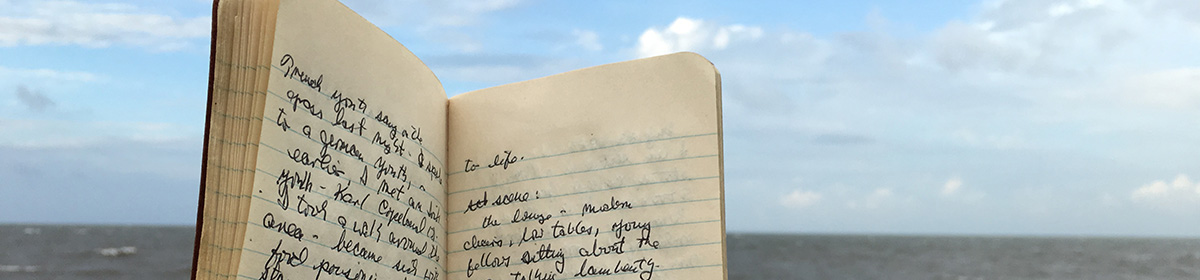
NEW YEAR’S EVE, 2025 AMID GRAY MEMORIES OF THE GRAY LIGHT OF 1973 TURNING INTO A GRAY 1974

Forty-nine years ago. Almost Golden, but a decidedly unburnished shade of gold we’ll call gray. Something made me think of this time, on this day when we burn old calendars and the passing of time is on our minds.

I was living that year — 1973/74 – in a studio apartment on Commonwealth Avenue, Boston between where Comm Ave traffic and trolleys bank left and Brighton Ave. begins straight ahead – and I was a block up Comm Ave from the corner of Harvard Street, right along the Brookline line. I was living in one of those bay-windowed, drab rows of amber brick apartment buildings — the last in an unbroken row before the jumble of offices and night spots commences leading up to the corner of Harvard Street.

At some point, I got in my car that afternoon of New Year’s Eve to go somewhere while it was still daylight — I forget where I was going, or why. Comm Ave is wide and double-barrelled at that point, and I somehow, completely sober, turned onto the wrong barrell. A concerned soul coming in the right direction pulled up and blocked me from going any farther, assuming I was one of those folks who’d gotten an early start at the celebration. I wanted to get out and explain to him that I’d immediately realized my mistake and just wanted to travel the twenty feet to where I could turn into the parallel road and u-turn. But I was forced simply to back up and u-turn to get going right. I’m sure the other driver figured I was drunk.

Why am I thinking of this now?

Well I guess because it’s one of many New Year’s Eve’s in my life — there have been far more memorable ones. This one, in fact, was rather drab. I don’t recall how I rang in that particlar new year.

I guess all I recall about that time and place (again, Comm Ave, Boston, 1973 into 74) when I was twenty-seven is how isolating that period felt,I having until around October of ’73 lived “in communion” with three other guys in a house at the quiet far edge of Cambridge on the Belmont line, far from city noise and squalar and danger. Those guys would remain my friends forever. One of them was already my friend prior to that point in my life, and he was the one who invited me to join the house — which was breaking up because one guy was going off to Indiana to graduate school , the other ( his former Harvard undergraduate roommate) to teach law in Miami, the third — I forget where he was going, except into a studio apartment in Cambridge. He lives in Chelsea now. (I’ll send him a greeting. He lost his brother this year.)

My lime green Pinto — my first car — was stolen from out behind theComm Ave building on the following Washington’s Birthday. That civic anniversary helps fix the date of the theft in my mind. It turned up in the D Street Project in South Boston, a notorious nest of criminal white punks. They’d tried to pry open my trunk to see whatever else they could steal. (I wonder where those little pricks are now, on this New Year’s Eve? Old men, dead, reformed ex-cons, unreformed, still incarcerated. They’d broken off the ignition and must have started the car with a screw driver.

The neighborhood was notoriously transient. I managed to make friends with the pretty girl across the hall (I found her name recently in a journal but will not repeat it here). She was a good friend, eager to make a romantic connection, but not with me. We didn’t have a lot in common. I recall playing Stravinsky’s Rite of Spring for her and she declared it ‘crap music.’ ( Not that that makes her a philistine — Stravinsky is an acquired taste – and the Rite of Spring ain’t a serene classical serenade.) We hung out a little. She had female friends, too. I don’t know, it occurs to me, where she was from originally — probably the Boston area.

I would come to learn that she had been raped while living at her last address not far away. She told me what portions of the terrible story she could bear to repeat.

She was good to me, cooked a spaghetti dinner for me once, invited me over now and then. She had cooped herself up with a very high-strung Irish Setter dog — imagine living with a big dog in a little urban studio! But she was not the only woman in that building who sought security and companionship with large pedigree canines, even though dogs were not allowed. I saw the poor guy who emptied the trash stuggling with the terrible odor of dog waste. I’ll reveal at least that her first name was Susan. She also had a massive security door lock that had a pole extending from the inside of the apartment to the inside of the door to the hallway. It was firmly secured to a plate on the interior hallway floor I don’t have to explain why she would have such a lock.

I’ll stop there. Hadn’t meant to ramble on about this, a gray laser trained on a brief gray moments in a gray time in a gray building in a gray neighborhood.

It’s 2:05, and I see that memory drifting off in a gray mist.

I hope my old neighbor Susan, wherever she is, has found bright colors, safety, freedom, romance, marriage, children, even grandchildren. She’d be in her seventies now. She was working during that period as a legal secretary at a downtown law firm where a fellow secretary told her of an apartment open in her Cambridge building. That was how I found my next apartment — where I was very happy in a neighborhood north of Harvard Square. I would live there from October, 1974 until Labor Day Weekend, 1979 when I hooked up my Dodge Dart (I’d gotten rid of the Pinto) to a UHaul and departed for a life-altaring period of TV employment in Fort Myers, Florida.

So I have to be grateful to this Susan for making that connection for me.

I last saw her when I’d pulled up to an intersection one night coming from my newspaper job’s main office in Dedham. It was at the border of West Roxbury on Route One. She was in the car that pulled up next to me. She was on a date with a guy I knew she was seeing who happened to be a young cop. (She’d wound up getting to know him during the legal aftermath of her very bad experience.) She spotted me and greeted me happily through the open passenger-side window of her date’s car. I was smoking a small Parodi cigar. It was a winter night; I was wearing a winter coat, probably still driving that little Pinto.

“Since when do you smoke cigars?” she asked cheerily, and from all appearances happy to see me.

“Since I got decadent,” I said, that being the only stupid thing I could think to say. (I wish I’d said, ‘since about ten minutes ago.’)

We chatted ever so briefly –seconds — with her cop date looking over from the driver’s seat appearing very friend, though maybe wondering if I were a rival.

Then the light changed, we drove off, and that was it. Gone forever.

Green light. Gray light. Green/Gray memories.

I’m braced for a new year far into my life, far from that time and place.

It’s 2:13 p.m. Sunset is at 5:46 p.m. E.S.T. (I’ll bet they’re already swarming into Times Square.)

I must make it a good year, for me, for everybody I meet.

I must make good memories.

Bright memories.

Goodbye, gray times.

CHRISTMAS EVE 2025 AT THE LAST MILE LOUNGE

35 degrees in Boston as day dawns, December 24. There a 90 per cent chance of rain — a rainy Christmas Eve? Now it looks like it might snow. A white Christmas? Really? Gray drops falling into snowy remnants of the recent freeze and snowfall? Or fresh, glowing snow of the kind the child in us likes to sing and dream about. We’ll see.

Meanwhile, at the Lounge….

Haven’t been to the Lounge in a while. The Last Mile Lounge out where the cities of Revere, Lynn and East Boston, Massachusetts converge like carnival bumping cars, not far from the ocean at Revere Beach, the airport (a crazy place today), the city (glowing night and day until the new year when it will submerge again in cold and gray), the country and all of life and nestled in a neighhood of happily variegated wood and brick homesteads that, for Christmas Eve, sit quietly where, now and then, on narrow streets off the main route into Lynn across the marshes, a soul or two will come to stand before some woodframe ghost and tell their kid they grew up there and tell them about the things that happened in the small front lawn if there is one and the back lawn if they can see it where it backs into other houses or some old garage.

By nightfall, those houses, occupied by generations born more recently, some in this century, will glow with lights. Great. Silent Night.

The year will end soon. End again, begin again. On and on and on.

For now, the Last Mile Lounge has its scattering of Christmas decorations — Deano the bartender stopped spraying that fake snow on the window. HIs old girlfriend Jean liked it. She moved someplace south, oddly, to escape the real snow and Deano figuired there’s enough real snow around every year that he doesn’t need to be spraying fake stuff. Crazy things we do for girlfriends.

But he does put some poinsettia on the ledge in front of the windows; he does hang stuff above the mirror behind the bar and around the main room –and, of course, there is the tree that got deocrated during the tree-trimming party on the 17th. Joe Barron, the owner, insists on a Scotch Pine or a Fraser Fir, no balsam. Guess it has to do when HE was a kid. (Joe is usually down on Key Biscayne, but somebody told me he’s back and occupying one of the two upstairs apartments — Knox the artist is in the other. Knox, by the way has finished his Man Walking The Last Mile mural — only to have the nurses and a group of Revere City Hall secretaries come in and tell him it’s depressing — a guy walking between two prison guards headed for the swining door down a long corridor — and The Chair. “It’s for guys who won’t straighten ou,” he told them.” But that didn’t satisfy them. “I’m married to a guy who won’t straighten out,” said the woman named Cheryl. That led to a lot of bad jokes — so much so that Knox spent three days changing around the whole mural so that it’s a painting of a guy smiling between two smiling guard walking BACK from The Chair — alive….and Deano started serving a drinking at the bar call Governor’s Reprieve.” Then Knox stuck a sign under the three guys saying, MERRY CHRISTMAS.–and painted santa caps on all three guys.

“You ruined it,” said Charlie Simonetti. But his girlfriend Cheryl Burkhardt said, “I love it.”

Knox drank the first Governor’s Reprieve, skipping his usual Blushing Monk. “I’ll turn them around after the the New Year,” he said, feeling warmed by the Reprieve, no doubt, who’s ingredients I’ve yet to learn. I sat down next to him, slapped him on the shoulder, wishing him the greetings of the season and ordered my cranberry and seltzer with a twist of lime.

Deano has his little manger set up behind the bar. The magi are down by the bottle of Old Bushmill, working their way toward the Epiphany.

“Kids are coming by about 7:30 with their parents to sing carols,” Deano told me.

“Kids in a bar?” I ask.

“Outside — out the side door on Myrtle Street. Safe and sound. We raised money for their trip to the LaSalette Shrine in Attleboro last year. And we collected canned goods for their food drive. It’s all about gratitude.”

“I’m grateful,” I said, and sipped my tart little Christmas cocktail.

Carols at 7:30. I was thinking I’d have to come back for that.

“Spanish and English,” Deano said. Stickey and the Crow will be here.”

Stickey and the Crow. I was wondering where they were. Stickey Sammartino and Jackie the Crow. Regulars as regular gets.

“God rest those merry gentlemen,” I said. Knox called for a toast. Everybody toasted —

Kenny Foy (I didn’t even see him over by the juke box) called for a toast of the three guys on the wall, especially the smiling convict – convicted but forgiven on Christmas Eve.

“Joy to the world,” said Athena Leroy, the realtor from Beverly (I didn’t see her, either.”

Dean plucked the Virgin from the creche, held her high. “To miracle births and mercy.”

“Very nice said Pippa Goldfinger who’d just parked her Mercedes and walked in the side door.

I walked down to the beach after that, to see the gray Christmas Eve clouds gathering and the December wind blowing in off the surf, a northwest breeze — and the seabirds were overhead–and a plane heading into Logan bearing sons and daughters home to mom, dad, grandmom, granddad.

First Mile, I thought. Miracle birth. I heard a church bell on the wind. Think I imagined it. Nearest church was — where?

Early Dark. Home for things unseen, unimagined. Pray like crazy, hearing children’s voices–and I hope that wasn’t gunfire.

No. Just a truck lowering his tailgate, making a delivery up by Kelly’s

Somebody working Christmas Eve. Bless him.

And is that a snowflake? Or a raindrop?

BLESSED DARKNESS

The winter solstice. Shortest day. Sunset at 5:40. Christmas lights. Chill, deep silence.

Whose woods these are, I think I know.

His house is in the village though;

He will not see me stopping here

To watch his woods fill up with snow.

My little horse must think it queer

To stop without a farmhouse near

Between the woods and frozen lake

The darkest evening of the year.

Many will know the rest, know that this pause in which one can almost hear the snow falling. Robert Frost wrote this in 1922, the year my mother graduated from high school. She loved Frost. Didn’t know all the levels to his poetry; didn’t have to. No one has to. Pelucid in its evocation of a human moment when even the horse wonders why a human would stop on his busy way on this darkest night when the earth is tilted farthest from the sun. (It’s the time when Christian, centuries ago, chose to mark the coming of The Light into the world, the light darkness could not possess.

But, of course, Frost’s man — probably him in that moment –had to move on. He had, as do we, promises to keep…..

ROSE-COLORED INTERLUDE

Gaudate (Rejoice)

We wait. The seed is planted. It waits the winter and the spring rains. (James 5:8)

In the doorway of EddieDubuc’s old sandwich shop, corner of Neponset Ave and Pope’s Hill Street, shuttered and sealed up in plywood beginning early in the Sixties. (Don’t know if Eddie ran out of money, just got tired of running the place, or what. ) Waiting in the shallow shelter of Eddie’s old doorway for the MBTA bus to carry me to the rapid transit station at Field’s Corner, after which I had to disembark at either Andrew Square or Broadway and catch the City Point bus to a final bus stop — then walk a block…all due to the drab obligation of high school of which there are only scattered happy memories, just the daily filing into the grim, dark halls of the brick school, some of that time in the first two years being bullied — and, at the outset of this daily journey, coming out the front door of 210 Neponset, walking up that long neighborhood block every morning to that bus stop in front of vacant, abandoned Eddie’s lunch place. Only now remembering the one freezing winter morning cloistered in the doorway with a couple of adults, all of us jokingly bemoaning the necessity of waiting bundled up but still cold and in severe discomfort. It was about then a bus passed by, sadly not our bus, emblazoned on its side with an advertisement for travel to Florida, a long, tanned female , sun-glassed body reclined on bright sand. Laughter, one adult joking, noting the longed-for escape. (Does he live, as I do now, in Florida? Did Florida, often warm to another level of discomfort, prove to be The Second Coming of our humanity? Humbug! We still wait, for this cannot be all there is. Are those adults who shared that doorway with me still on this earth, or gone to the Judgement and, having waiting and hoped for it, gone to the sunny sands of a happly timelessness we simply cannot imagine?)

I wait now on the morning of Gaudate Sunday, being urged to be patient, wating for the seed planted in me to receive the winter and spring rains.

This James of the Bible, is said to be one of the ancient pillars of the new Church in Palestine, one of the many New Testament personages named James. (Can I call him Jim? Was there a Jim standing in that doorway with me that cold morning? Was I laughing with a prophet?) This James (Jim) was, we’re told, an administrator, not the Apostle James. Some guy who knew a lot of good stuff and, all through the ages, is telling us to WAIT. BE PATIENT, while trying to be good, faithful, worthy, all that. Easy for him to say — or have said.

At the end we preferred to travel all night,

Sleeping in snatches,

With the voices singing in our ears, saying

That this was all folly.

T.S. Eliot, “The Journey of the Magi”

They will light a rose-colored advent candle today.

Hope. We wait….burning, like that little flame….

DECEMBER 12TH, 2025

This date is, incidentally, many things, sacred and mundane — the Feast of Our Lady of Guadalupe, Frank Sinatra’s birthday.

But it is, most especially, the birthdays of my twin brothers Ronald and Douglas. I must note that fact, for it is very much on my mind.

Ron is extremely ill and infirm with Parkinson’s Disease. He lives in Winthrop, Mass, near in to Boston, the airport and all things north of the heart of the city.

Doug has lived for decades in Denver. I’m happy to say he is healthy.

Happy birthday, Twinnies. (“Twinny is what Ron’s and Doug’s boyhood playmates and companions were given to calling them from time to time. They were identical.

They are a major part of my life. I pray Ron will gain enough health and strength to be able to get home from the rehab in Woburn, Ma. and enjoy life. I pray Doug remains healthy.

WHAT NOW IN UKRAINE?

Direct from today’s New York Times, December 8, 2025

When the war began, Ukraine’s Western allies wanted to figure out how to send money to Kyiv without seeing it vanish into the pockets of corrupt officials. To protect the money, they insisted that (President) Zelensky’s government allow groups of outside experts, known as supervisory boards, to work as watchdogs.

But ( a Times investigation has found) the Ukrainian government has sabotaged that oversight, allowing corruption to flourish.

Zelensky’s administration stacked the supervisory boards with loyalists, left seats empty or prevented boards from being set up at all. Leaders in Kyiv even rewrote various company charters to limit oversight, which allowed the government to spend hundreds of millions of dollars without outsiders asking questions about where that money was going.

Zelensky has blamed Energoatom’s supervisory board (Energoatom is Ukraine’s utility company) for failing to stop the corruption. But, according to documents and interviews with officials, it was the government itself that prevented the board from doing its job.

Zelensky’s role

Zelensky himself has not been directly implicated in the corruption.

But his policies may have enabled it. After Russia’s invasion, Zelensky relaxed anti-corruption rules in the name of boosting the war effort. He worked with political and business figures he had once called criminals and, this summer, he tried to curtail the independence of anticorruption investigators as they pursued the case that ultimately implicated his associates. (He reversed course after Ukrainians poured into the streets in the country’s first large antigovernment protests during the war, saying that Zelensky was threatening Ukraine’s fragile democracy.)

In the course of the investigation, Zelensky asked for the resignation of two ministers and his powerful chief of staff, Andriy Yermak.

Were we warned of this possibility?

Yes, mainly, in my memory, by certain American pundits and figures characterized as “right wing.”

But, left or right, it’s the only story: where there’s money – be it Ukrainian hyrvnia, Russian rubles, American dollars or, once upon a time, Roman denarius, there is greed to currupt us.

MACKERELS IN MOONLIGHT

I’ll take a rare, reluctant excursion into a topical area I most often avoid (contemporary politics), but I do so in the interest of the worthy topic of language, specifically words, their use and abuse.

I’ve read that during the presidential administration of Gerald Ford, Hollywood comic Don Penny was brought into the White House communications office to improve the president’s wooden delivery.

Now, Gerald Ford was a good man. His transitional tenure in the highest office in the land was marked, as I remember, by steady, mostly uncontroversial initiatives (if you rule out his pardon of Richard Nixon, for which even the liberals ultimately gave him an award and told him he did the right thing in declaring an end to “our long, national nightmare,” i.e., Watergate.

He said of himself, after assuming — in a most unassuming way –the Oval Office ( going from vice president to president in the wake of Nixon’s resignation) that he was “a Ford, not a Lincoln.” He was a humble man.

But it is true — his delivery of speeches put you in mind of another word — soporific (sleep enducing).

So it has been written that, after one trying session with Ford, Don Penny said, “Mr. President, these are words. They mean something.” It was a joke, meant to cure Gerald Ford’s inarticulacy.

But yes, we must all remember — words DO mean something.

The current president is part way through a second term in his broken tenure. His inarticulacy is well-known and, one might suppose, deliberate. He comes under enough fire from the Left without me repeating one wag’s suggestion that he functions with a fourth grade vocabulary. His supporters would say he is plain-spoken. You may notice that he repeats himself often, seemingly in a failed search to find a better. clearer way to say what he’d just said. One might also theorize that this is calculated to drive him point home — twice.

Nonetheless, in Donald Trump’s and all of our mouths, words DO mean something, whether you like them or not. Among the things for which he will be remembered is extreme rhetorical recklessness. This has been noted often by friend and foe alike, and it is clear he never intends to change, short of a divine rhetorical intervention –such as God having Lincoln, Gladstone, or even just Ted Sorensen appear to him in a dream to scold him like a Christmas ghost. “Mind your words, Donald!”

His most recent venture into rhetorical recklessness was to suggest that some members of Congress should be executed for, in an undeniably blatently political gesture, creating a video in which they remind military service members that they don’t have to obey illegal orders.

Well, this is true, if an order can objectively be judged to be illegal. That, of course, is not at all a clear, easily recognizable matter to determine. It could be decided after the inevitable courtmartial.

The subsequent furor among Democrats and the liberal media was a predictable — and partisan – tempest in a tea pot. But even Trump’s partisans were inclined to call it –reckless. Another in the inumerable instances of rhetorical recklessness on the part of Donald Trump. It does not serve him — or the nation — well.

This sort of thing is boundless in our society now dominated by the impulsive world of social media. Trump is our first truly social media president.

There is a way to discuss all matter — to object, affirm, criticize — that is powerful, creative, respectful, useful — if the president would only pay attention to the impact and value of his own words.

To which I’ll add, in despair, ‘ain’t never gonna happen.’ Trump is Trump –rude, crude, ineducable on this score. (How did he ever pass the verbal SATs to get into Yale??) And he is reckless. One prays his recklessness is a superficial calculation to shock on the surface while, again, one prays, he is actually more deliberative in private when he makes the decisions that affect our national and international fortunes. The jury is still out on that.

TRump is given to insulting people. I dislike that very much. That’s recklessness. Perhaps he could at least learn to be creative in his insults and denigrations, like John Randolph of Roanoke who, in describing the corrupt nature of another politician’s speech, famously said, “thy words stinketh like a mackerel in the moonlight.”

I guess that would be an improvement. Better still, Mr. President, how about you just stop hurling insults?) It stinketh!

IN THE WAKE OF MELISSA…

I don’t listen to a great deal of rock music since I stopped drinking thirty-eight years ago. Much of it heard with sober sensibilities, filtered through my brittle predispositon and frank prejudice seems merely visceral, hedonistic and superficial — mass enterainment at its most venal. But, that’s just me.

And here I go praising the work of a couple of late, inspired, long-haired souls who wandered about out there in the red clay and neon rain between Macon and L.A..

I refer to keyboardist and vocalist Gregg Allman who died on May 27, 2017 in Richmond Hill, Georgia. He and his slide-guitarist brother Duane (dead in a motorcycle wreck on October 29, 1971 at age 24) formed the core of the Allman Brothers Band and, with their many sidemen, made a real impact on recorded popular music. Their Filmore East recording of “In Memory of Elizabeth Reed” is supurb improvisational, live rock, artful far beyond top 40 or studio-produced album rock fare. I’m only occasionally a fan of their blues/ rock genre but have often marveled at the craft, range, energy and improvisational near genius of these Georgia boys. I speak of “energy,” but that does not properly characterize the lolling Southern, half-staff stasis that was typical of a band, like most country or blues-rock bands, that seemed just to stand in the spotlight and play — and play and play. And that was and forever will be their glory. Just singing and playing. (Duane, by the way, was born exactly a week before me, Gregg the next year. I never knew this until I started to write this of a Sunday night.)

A guy who bought used vintage guitars and called himself a guitarcheologist, once showed me a picture of the stark, unlovely, chain-link-bordered suburban Macon, Georgia intersection where Duane, traveling at a high speed, collided with a flatbed truck and began his journey to death. There was nothing distinct or special about it — just roadside America. But this Allman Brothers fan and rock guitar afficianodo felt the need to photograph it. The band’s bassist Barry Oakley died close by, also on a motorcycle, a week later, drinking heavily and grieving. The world — it seems especially the world of rock music — seems to have its share of these dark, booze and drug-induced tragedies. I recall while in the Army reading of Janis Joplin’s and Jimi Hendrix’s substance-related deaths about a week apart.

Gregg Allman was married seven times, including to Cher ( who was also a serial spouse). It would seem then, that he had difficulty finding true and lasting love. He’s not alone, of course. But perhaps his best song was the love song “Melissa”. His brother Duane thought so. I happened to hear it recently as incidental music on a TV series in which a guy is saying goodbye to his girlfriend — who was not named Melissa. I’d heard it before, of course, but it struck me as sweetly, sadly fetching and so I made a point of calling it up on Youtube and listening to it — and to its elliptical, purposely ambiguous but evocative lyrics, which approach but are not real poetry. Just, as I say…evocative. Isn’t that what the best pop lyrics do? Evoke images and emotions? We don’t listen to most pop music for the chord structure.

And so, Gregg wrote and sang (I pluck phrases here), Crossroads, seem to come and go, yeah…There’s no blanket where he lies…In all his deepest dreams the Gypsy flies…With Sweet Melissa…”

No, not great poetry. Maybe not even a great lyric. Just evocative of some unseen, imagined and absence and longed-for “Sweet ” Melissa…

I’ve read that Gregg Allman wrote the song as early as 1967. He’d apparently tried and failed to write dozens of ballads, and “Melissa” was among the first that, by his measure, made the grade. It is written that the band was staying in a Pensacola motel and that Gregg picked up brother Duane’s guitar” which was tuned to open E and immediately felt inspired by the natural tuning.” The title’s love interest was almost called Delilah. Gregg allegedly settled on Melissa while in a grocery store late one night buying milk. That’s how he tells it in his memoir.

And that title made all the difference to a Youtube commentator writing three years ago under the handle of RoseandRichie. I don’t know if it’s Rose or Richie that says, This song is treaasured by my dad. My sister’s name was Melissa. She died at 26 Yr old. We often listen to it and cry together. Nothing unmanly about it. My dad is a war hero veteran and when he cries, we all cry.

So it is that songs touch us — evoke, remind.

For some on the long Youtube thread following the singing of the song, there are testimonials to its personal impact that seem hyperbolic, exceeding anything I personally could claim for any pop tune, such as when mariazimmerman8639 said five years ago, this song does things to me….brings me back to every wonderful thing in my life…the whole song is just mesmerizing…alweays will be.

You read that and think of Gregg Allman, himself now gone over the horizon into the unknown bourne, simply strumming in a motel room and on a late night errand to buy milk but summoning from within something that will move mariazimmerman years afterward –well, such it is that makes songs such a splendid, eternal form of human inter-communication.

hectorthewonderhalibut6331 (a person, based on his handle, with a playful streak) declares, or, you might say, prays…God I miss the times when this song first came out. Those days and those friends. Damn.

Yeah. Damn indeed. But southerngirl300 goes right over the hedges and declares, one of the greatest songs to ever be recorded in the last century.

Well, for some, probably so. Right up there with Frank Sinatra singing anything by Cole Porter. It’s all a matter of taste. Those cultural/ generational/aesthetic barriers do unavoidably divide usf

As for times when this song came out, it was the early 70s, when romantisizing nostalgia for the 60s was already kicking in. hectorthewonder is obviously a boomer. (And, by the way, the guitar work on the song sounds to me like the work of Duane Allman who would have been dead by the time the song was released, right? One account has “Melissa” being recorded in December of 71, another in February of 71. Duane’s fingers and spirit seems, to my ears, to be on the frets and strings in and between brother Gregg’s third-person choruses of lonely longing (Crossroads, will you ever let him go? No,no,no….I know that he won’t stay without Melissa.

The brothers are gone. Their band with its distinctive sound but a shadow of its former self, lingers on, still touring, even dropping into Madison Square Garden last April.

Meanwhile, maybe for all of this century, moonlighting balladeers in roadside saloons up and down America’s highways will likely be crooning about “sweet Melissa” to slow-dancing embracing couples in dimmed romantic lightiing. No doubt many babies born to Allman Brothers fans, like the lost but not forgotten sibling of Rose or Richie, might be among those shuffling about on the dance floor.

As for weddings and funerals where the bride or deceased happens to be named Melissa…those slow, sad, sweet strains will drift out over church and lawn.

Crossroads seem to come and go….with sweet Melissa.