MACKERELS IN MOONLIGHT

I’ll take a rare, reluctant excursion into a topical area I most often avoid (contemporary politics), but I do so in the interest of the worthy topic of language, specifically words, their use and abuse.

I’ve read that during the presidential administration of Gerald Ford, Hollywood comic Don Penny was brought into the White House communications office to improve the president’s wooden delivery.

Now, Gerald Ford was a good man. His transitional tenure in the highest office in the land was marked, as I remember, by steady, mostly uncontroversial initiatives (if you rule out his pardon of Richard Nixon, for which even the liberals ultimately gave him an award and told him he did the right thing in declaring an end to “our long, national nightmare,” i.e., Watergate.

He said of himself, after assuming — in a most unassuming way –the Oval Office ( going from vice president to president in the wake of Nixon’s resignation) that he was “a Ford, not a Lincoln.” He was a humble man.

But it is true — his delivery of speeches put you in mind of another word — soporific (sleep enducing).

So it has been written that, after one trying session with Ford, Don Penny said, “Mr. President, these are words. They mean something.” It was a joke, meant to cure Gerald Ford’s inarticulacy.

But yes, we must all remember — words DO mean something.

The current president is part way through a second term in his broken tenure. His inarticulacy is well-known and, one might suppose, deliberate. He comes under enough fire from the Left without me repeating one wag’s suggestion that he functions with a fourth grade vocabulary. His supporters would say he is plain-spoken. You may notice that he repeats himself often, seemingly in a failed search to find a better. clearer way to say what he’d just said. One might also theorize that this is calculated to drive him point home — twice.

Nonetheless, in Donald Trump’s and all of our mouths, words DO mean something, whether you like them or not. Among the things for which he will be remembered is extreme rhetorical recklessness. This has been noted often by friend and foe alike, and it is clear he never intends to change, short of a divine rhetorical intervention –such as God having Lincoln, Gladstone, or even just Ted Sorensen appear to him in a dream to scold him like a Christmas ghost. “Mind your words, Donald!”

His most recent venture into rhetorical recklessness was to suggest that some members of Congress should be executed for, in an undeniably blatently political gesture, creating a video in which they remind military service members that they don’t have to obey illegal orders.

Well, this is true, if an order can objectively be judged to be illegal. That, of course, is not at all a clear, easily recognizable matter to determine. It could be decided after the inevitable courtmartial.

The subsequent furor among Democrats and the liberal media was a predictable — and partisan – tempest in a tea pot. But even Trump’s partisans were inclined to call it –reckless. Another in the inumerable instances of rhetorical recklessness on the part of Donald Trump. It does not serve him — or the nation — well.

This sort of thing is boundless in our society now dominated by the impulsive world of social media. Trump is our first truly social media president.

There is a way to discuss all matter — to object, affirm, criticize — that is powerful, creative, respectful, useful — if the president would only pay attention to the impact and value of his own words.

To which I’ll add, in despair, ‘ain’t never gonna happen.’ Trump is Trump –rude, crude, ineducable on this score. (How did he ever pass the verbal SATs to get into Yale??) And he is reckless. One prays his recklessness is a superficial calculation to shock on the surface while, again, one prays, he is actually more deliberative in private when he makes the decisions that affect our national and international fortunes. The jury is still out on that.

TRump is given to insulting people. I dislike that very much. That’s recklessness. Perhaps he could at least learn to be creative in his insults and denigrations, like John Randolph of Roanoke who, in describing the corrupt nature of another politician’s speech, famously said, “thy words stinketh like a mackerel in the moonlight.”

I guess that would be an improvement. Better still, Mr. President, how about you just stop hurling insults?) It stinketh!

THE LIGHT WE CANNOT DULL

“The word ‘gay’ has always rubbed me the wrong way,”  James Baldwin told the writer Richard Goldstein, who interviewed him for the Village Voice in 1984. “I never understood exactly what it meant by it.” Baldwin also thought that the word “homosexual” was not a noun. (By which I assume he meant it was just an adjective, modifying a noun or nouns. Now it’s a word, whether noun or adjective, that has basically been declared inoperative by “gay” advocates–for some reason.)

One of Baldwin’s first pieces, published in a journal called Zero in 1949, was an essay on homosexuality in the novel. Novelists, he argued, know that human beings are not reducible to such labels: “Once the novelist has created a human being he has shattered the label and, in transcending the subject matter, is able, for the first time, to tell us something about it and to reveal how profoundly all human being interlock.” (Emphasis added.)

There are a multitudes of ways we mortals have found to be unatural and disordered in these insane times that are disordered morally and emotionally. This has been true, from the evidence, from the dawn of time.

James Baldwin was a gifted, troubled soul who, as often happens with gifted souls and gifted artists, managed to shed some light in darkness, even as he -we, us — linger in darkness and insist on dulling the light.

It’s the human way.


FLORIDA MID-WINTER REMEMBERING

Think not, when fire was right upon my bricks,

And past the tight boards hardly a wind could enter,

I glowed like them, the simple burning sticks,

Far from my cause, my proper heat and center.

-John Crowe Ransom

From Winter Remembered

________________________________

There’s a patch of old snow in a corner

That I should have guessed

Was a blow-away paper the rain

Had brought to rest.

It is speckled with grime as if

Small print overspread it,

The news of a day I’ve forgotten —

If I ever read it.

Robert Frost

A Patch of Old Snow

THE BIRTH

It must be concluded…that Jesus was born between the years 8 and 4 –most probably in the year 6 -before the Christian era as now dated. As for the actual date of his birth, universally now celebrated on December 25th, it can be said at once that this is purely a tradition. In the 3rd Century A.D., Clement of Alexandria chose April 19th; other suggestions were May 29th and March 28th. The Eastern Church for a long time celebrated January 6th. It was only about the year 350 that our own traditonal date gained general acceptance. Some have associated it with the feast of Mithra which the Roman calendar fixed at the beginning of the winter solstice ( December 21st) and there are certainly plenty of known instances where the Christian calendar has taken over pagan feasts. Gregory the Great himself advised his missionaries to “baptize the customs of the holy places of the heathen” and our All Saints Day (November 1st) and feastof St. John the Baptist (Midsummer Day) undoubtedly originated that way. For us December 25th is sanctified forever: it does not commemorate the persian god or the sacrificial bull, nor even the sun regaining his power over the darkness of the night, but that other star of which Malachi wrote: “…unto you that fear my name shall the sun of rigthtousness arise…. (Malachi iv, 2.)

Christ And His Times,Henri Daniel-Rops ( 1901-1965)

(translated from the French by Ruby Millar), 1954.

(This is a great, much neglected treatise and history on the life of Christ by a devout former agnostic, late, prolific and renowned French historian and member of the French Acadamy, probably a genius, decidedly odd-looking( at least based on photographs — looking sort of like Alfalfa of Our Gang fame, and always with his eyelids at half-mast. In one surviving photograph, you see him lighting up a cigarette, probably one of those strong French numbers, leading me to speculate on causes leading to his death at 65.

As for Christ’s birth, and, for that matter, death…

We must consider whether, ultimately, it matter when He was born–and simply marvel at the fact that He might actually have been born and died in the same month (April). That would be a reason to think of the springtime of April as every bit as special as the cosseting twilit advent of winter in the month of December.

For all that really matters is that he WAS born. And I, like millions, prefer to mark the time of the coming of The Light within days of the nadir of light, the season of darkness ( The winter solstice). This simply seems very right. We’ve got plenty of light of a physical kind in April and May, and blooming flowers to mark and brighten the rebirth that is the Resurrection. We’ll always keep the season of birth in early winter. The Light came in Darkness.

Winter is a better for darkly meditative thoughts about who or what might deliver us from our mess. Our darkness.

And, well…Bing Crosby never could have sung about a White Christmas in spring. (A whimsical consideration, to be sure, but, I, like millions, cherish the association of Christmas with snow, sleigh rides, jingle bells, Frosty, Rudolph,etc.)

I should point out that among the religious congregation at St. Benedict Center in Still River, Massachusetts are scholarly consecrated brothers who can make a good historic and astronomical case why Christ was, indeed, born December 25th. I’m sure they’re not alone in making that case.

But, again, what does it really matter? If He was and is who He says He was and is (I Am Who Am), He is born everyday, every hour, ever minute — and never dies, unless (as in the original story) we shut Him out or kill Him.

Let’s not do that. Let’s make room at the inn.

And let’s jingle all the way!

Amen.

HARMONY AMID HORROR

Harmony, as it happens, is the name of a seriously topical musical of the same name. I wish I’d seen.

It came primarily from a seemingly unlikely source — Barry Minilow, who (though I was not aware of it) is Jewish and in the brilliant twilight of his career, though its most public manifestations were melodic juke box hits like “Copacabana.”

But Harmony is serious business about a seriously discordant period of modern human history.

Why am I writing this?

Because I just happened to stumble on a two-year-old review of the show. (It is my habit never to visit the bathroom, public or private, without something to read. Thus, before heading to the privvy, did I pick up a two-year-old magazine from one of my pack-rat-stacked piles of obscure journals (these admittedly being fire hazards which I insist on keeping around for the fire they ignite in my brain).

On this visit to that periodical, I turned to the “stage” section.

And there it was. Something old but still new on a subject that is, sadly, eternal — the undaunted human spirit amid state tyranny, bigotry and terror. And it was, further, a musically relevant offering from the world of show business that did not have its origin on The Voice or America’s Got Talent –and was not seeking to push some politically correct “message” into my ears and down my throat.

Harmony is about a six-member 1930s comedic German singing group with three Jewish members that gets caught in the raging Nazism of Weimer-era Berlin. It’s based on fact and set in the same milieu that is the setting for Cabaret, among the most celebrated stage and screen hallmarks of Seventies America. The group became so famous that they appeared in more than twenty films and toured internationally with the likes of Marlene Dietrich. Manilow and librettist/lyricist Bruce Sussman, according to the review, “tweaked” the show for a quarter century and “devised a cunning range of songs for both the boys’ cabaret act and to illustrate their off-stage drama.”

If Jersey Boys about the The Four Seasons can offer compelling drama in its contemporanious American context, I can only imagine how much off-stage drama can be drawn from the story of a mixed Jewish/Gentile troupe “stayin’ alive” and hiding in plain sight in the world of the Third Reich.

Again, from the review I learned that the show offers songs ” ranging from “snappy, sometimes slightly naughty comic numbers suitable for debauchery-seeking Weimer nightclub audiences to lush ballads such as the standout duet called Where You Go,’ which is sung by the wives of two of the singers.”

Of course, life on and off stage gets complicated for the group and their families, such as when a fan who also happens to be a Nazi officer informs the singers that they “project the image that Germany is amusing and non-threatening.” (Reminds me of how current Russian, Chinese, Iranian or North Korean shills now and then proffer similar, transparently false assurances that their dreadful societies are fun boxes of freedom and light-hearted amusement.)

Among the group’s edgy efforts while on tour to project the truth about their country’s growing agony — in this case, during a show in Copenhagen — is inclusion in the score of a “witty but chilling song” entitled “Come to the Fatherland” which concludes, Or we’ll come to you.

They survived during Germany’s twelve-year Nazi nightmare. In 1933, they came to Carnegie Hall and the NBC airwaves and were tempted to stay but reluctantly, probably wrongly, feared they would not be welcomed here (this according to this review which, by the way, was written by Kyle Smith for the journal New Criterion in June, 2022.)

The show’s narrator,apparently paralleling Joel Gray’s memorable role as Master of Ceremonies in Cabaret, is an amiable group member named Chip Zien. I get the sense that that was the name of one of the actual group members, the last of whom died in 1998. Some of his commentary, according to reviewer Smith, is “tense” and “regretful.” His “younger self” wishes it had made different choices than, perhaps, to have stayed home during such a dangerous, horrific time for all Europe and the world, thereby giving any measure of aid and comfort to Nazi oppressors.

The the show is also obviously a tribute to all long-suffering Jewry, to all who shielded and protected the singers, and to Holocaust victims. In fact, the 2022 performance took place at the National Yiddish Theatre in the Museum of Jewish Heritage in lower Manhattan.

Barry Manilow is on record saying Harmony is the career achievement of which he is proudest.

Rightly so.

But have there been any subsequent performances of Harmony over the last two years?

Manilow, Sussman and coreographer Warren Carlyle apparently staged the 2022 version on a very limited budget with minimal sets and scenery changes, relying heavily, according to Smith, on video and photoraphic images.

Some college, or even high school drama department or community theater somewhere should take note. A musical that finds a way to seriously yet entertainingly illuminate the problem of anti-semitism would be very timely indeed.

WHAT I LEARNED AT THE PICNIC

Nothing like a bright, sunny day at the end of August to get you thinking about the environment. I want to save the environment. I like wind and sun. I doubt we can live by wind and sun alone.

But who am I to say so? ( My former colleague Tom Matteo in Massachusetts heats with solar and says he hasn’t had a power bill in three years.)

I’m sure he’s not alone among solar –or wind — boosters. In time, their individual testimonials may heat up the push toward reliance on sun power or turn the blade on wind.

There are skeptics, millions of them, and those whose life-long livlihoods and skill sets and knowledge of the pitfalls of wind and solar are generating abiding objections and warnings about the limitations of sun and wind power. Beyond that, they, like I, would warn against extremes and government coercion when those in power decide they will force us off reliance on fossil fuels.

A weekend ago, I attended a picinic of Local 7 of the United Association of Plumbers and Steamfitters in Upstate New York. There were hot dogs, ribs, wings, the works.

I wound up with a copy of the Association’s trade journal containing an editorial by its General Secretary-Treasurer, Derrick Kualapai.

Seems in our time, I’m not the only one warning against the extremes. Kualapai is the man issuing the warning here — against those who insist adamantly — and sometimes intolerantly –that alternative clean sources (ACS), must be limited to wind and solar. To insist on these sources solely – and I don’t doubt there are many in the environmental movement who do — is, in Kualapai’s words, to insist on “extremely narrow and unrealistic approaches” to the quest for a cleaner environment.

Of, course, Kualapai is a major stakeholder here.

One must always be suspicious of the motives of any writer — of those arguing any point of view — be the motive financial, ideological or what have you. So I invite everyone to be skeptical right along with me. The union for those who earn their living by traditional ways of doing anything might always have ulterior motives for their arguments. But, of course, that does not automtically make their point of view wrong.

Kualapie says his union supports policies that protect and preserve the environment. “Let me be clear at the outset,” he writes in the Journal ( of the United Association), ” we are not climate deniers.” He insists, with the same vigor as those who might attack the union on these grounds, that the union and its members “advocate fiercely for smarth, sensible, decorbonization strategies, including green hydrogen, bioenergy, geothermal and thermal energy networks, as well as advanced nuclear systems, including small modular reactors, and carbon capture utilization and storage.”

Sounds great to this layman, though I don’t know what “capture utilization and storage” is all about except maybe, as the awkward phrasing suggests, the capturing and re-use of carbon that the power industry has managed somehow to store? (Can you tell I was an English major?)

But I’m being told here that these are all options to a narrow focus on wind and solar as exclusive alternative clean sources of energy. Industry stakeholders actually like these alternatives. But I’m being told many in the environmental movement do not.

And Kualapai concludes, “while the UA recognizes the push for wind and solar energy, we’ve also learned that –even with maximum development –they will never solely provide enough power to ensure a sufficient supply of reliable energy for the future.”

“Never” is a challenging word. But that’s what he says, while I’m sure the Green Movement is insisting, ‘never say never” when it comes to wind and solar.

But I ‘m glad I went to the picnic. In the interest of balance, I guess I’ll have to watch for the next picnic held by the Green Lobby. After all, a hot dog is a hot dog, whether you heat it up using gas, wind or solar.

Charcoal briquettes are best.

And in all liklihood, at a Green Lobby event, I’m not likely to be eating meat.

A corn dog will do.

THE STORM, A FRENZIED DRUM…


It’s here. It’s dark. The wind, so much wind. Rain, constant rain….

A lake has formed out back where the grass dips into a swale. Water in the street. There was, briefly, a tornado warning. Seems a water spout might have moved on shore. It dissipated, happily.

That was not that close to us, but it might have been moving this way.

Those were uneasy moments.

Storms can urge you think, not alone of thepresent danger, but of the future — of this house, the people and the animal in it. Of life in Florida. Of children.

And in 1919, W.B. Yeats wrote, amid the storm,

A Prayer For My Daughter

Once more the storm is howling, and half hid

Under this cradle-hood and cover lid

My child sleeps on. There is no obstacle

But Gregory’s wood and one bare hill

Whereby the haystack-and roof-leveling wind,

Bred on the Atlantic, can be stayed;

And for an hour I have walked and prayed

Because of the great gloom that is in my mind.

He continues….

I have walked and prayed for this young child an hour

And heard the sea-wind scream upon the tower,

And under the arches of the bridge, and scream

In the Elms above the flooded stream;

Imagining in excited reverie

That the future years had come,

Dancing to a frenzied drum,

Out of the murderous innocence of the sea.

Yeat’s daughter Anne was a sickly child, but she became a painter, constume and stage designer and lived until age 82 and died on July 4, 2001. As such, the poet’s prayers amid the howling storm were answered. His daughter lived a long and apparently happy life. Yeats died January 28, 1939 at age 73. Another storm was brewing then — in Europe. But then, if I’m to continue, I’d have to get into Yeat’s complicated politics, and complicated life, which mingles with the stormy history of the 20th Century — which his daughter managed, from those infant moments in 1919, to live well beyond — dying before the 21st Century Age of Terror began in earnest at 8:46 a.m., September 11, 2001

It is 9:25 on this Sunday night, and THE TELEVISION IS BLARING ANOTHER LOUD, URGENT ROBOTIC VOICE telling us that four-to-eight inches of rain have fallen and flash flooding is imminent. The announcement is interrupting the televison drama Diane was watching for comfort and escape from all the nerve-shattering danger abroad in the air. She yells at the TV in frustration. PLEASE STOP!

I hear either thunder, or the tin roof bobbing in the gale. Will the power fail? Bringing silence? No escape?

Call this A Prayer For Us All, agitated and menaced by tropical turbulence whipping empty streets of wildly dancing palms and bobbing street lights. And here we sit in the most fragile of tin and vinyl domiciles.

THE LOUD ROBOTIC VOICE AGAIN, THIS TIME ANNOUNCING A TORNADO WARNING TO THE SOUTH AROUND SARASOTA. “DON’T WAIT TO HEAR A TORNADO,” THE VOICE SAYS. “TAKE COVER NOW.”

Where, people down there must be asking?

The dog, at least, seems calm, under the influence of CBD Cheese Bites.

Weather bites tonight.

Poetry sooths.

O that we could be in Gregory’s Wood now, where it’s probably calm.

But then, Yeats was writing in a time of violence political turbulence.

So am I.

But we still have power.

And the power of prayer in troubled times.

(THE INTERNET FAILED JUST AS I POSTED THIS)

WITHER WE U.S. BOOMERS, AS JUNE DOTH ONCE AGAIN BLOOM ?

When we hit 35, we posessed 21% of the nation’s wealth. Millenials nearing that average age possess just 3% of the nation’s household wealth.

So says a fascinating volume noted below that broke upon the scene almost three years ago.

It has been alleged in various quarters that our bid for personal freedom ended up destroying the institutions and restraints that made freedom safe and possible.

The book containing those charges is Boomers: The Men and Women who Promised Freedom and Delivered Disaster. (Sentinel, 2021)

I’ve only scratched the surface and so cannot make a good case for or against Andrews’s dire thesis. But, being a Boomer, I’m certainly interested in exploring her less than throroughly rosie exploration of the civilizational contributions — or desecrations — of Steve Jobs, Aaron Sorkin, Heffrey Sachs, Sonia Sotomayor — Boomers all, and all, among others, scrutinized in this book . And, of course, of millions of others (including, as I’ve indicated, myself), will have to examine our own consciences and our sense of our own contributions or divigations.

To mention just one person:

Camille Paglia has always interested me, a flashy Boomer contrarian. I don’t hear much about her lately.

But I agree with those who admire her for resenting the over-elevation of pop culture and the denegration of academia — and, with critic/observer Michael Brendon Dougherty’s mordent aside about “the naivete’ of a generation that thought the worst effects of free love could be handled tidily by penicillin.”

But Dougherty concedes, “If Boomers are going to die with nearloy three-fifths of our nation’s wealth (which apparently Andrews’s book maintains), “we had better find a way to be written into their last wills.”

I’m one Boomer who doesn’t expect to reap that bonanza. So I know no one will be interested in finding their way into my will.

Not a post-Boomer soul.

THE GREAT SCATTERING

Why, oh why this bizarre reign of what we’ve come to call “identity politics”?

Damned if I know, if, that is, I confine my thoughts to those thoughts I can just peel off the top of my agitated head. Go deeper, like one diving with full oxygen into a murky lagoon, and –why, there you find a tangled subaqueous plethora of reasons why a reasonable race of bipods such as we are should find ourselves so messed up.

I’m helped –after being launched upon — this deep dive by writer Mary Eberstadt whose 2019 book Primal Screams (plural) explores our penchant for dividing along racial lines and other related common contemporary phenomena such as the insane excesses of modern political correctness, frequent compus demonstrations over every perceived injustice and what has been called the “cancel culture” in which, at the whim of some influencer, you or I can be discredited and banished from public discourse. Throw in radical feminism, gender-bending ideology, the excesses of the Me Too movement and all manner of unhinged activism.

I confess that Eberstadt’s book is on a heap of unread books on my library wish list. I just happened to stumble upon an old review. Therefore, I’ve read excerpts in that review that assure me the author’s analysis is free of rancor or any diatribe against “cultural Marxism.” It feels like a good book for the times.

She maintians our current state of affairs is not all about “power” — a charge I often level against the activists. She claims all such contemporary social-justice rebellions, now so tiresome to so many of us, amount to a “survival strategy” for the alienated. (Come to think of it, I, too, in my vigorous push-back against it all might also be engaging in such a strategy. I’m feeling alienated, too.)

“Such phenomena are indeed bizarre,” she writes, “if we examine them with the instruments of Aristotelian logic. But if instead we understand them against the existential reality of today –one in which the human family has imploded, and in which many people, no matter how privileged otherwise, have been deprived of the most elementary human connections –we can grasp in full why identity politics is the headline that just won’t go away.”

Eberstadt calls this process “the Great Scattering.” Because so many people below a certain age no longer enjoy a traditional family. They are, indeed, scattered.

Her first salient point: there has been a breakdown of family and familial bonds — our “natural habitat.” What is the connection between blood and personal identity? Haven’t we all become disoriented in search of intimacy — and personal identity? The human animal is now a flock of sheep without a shepherd. We now place more emphasis than did our ancestors on voluntary associations rather than on our once far more solid family environment. Feel free to challenge all these assertions. By themselves, they can feel gratuitious.

That’s why we should read books not reviews. But Eberstadt’s conclusions were there for me to ponder, such as that a healthy sense of self, and our moral maturation, among other essential developmental stages, have not only been delayed; they have, in many cases, been entirely stunted in the individual. I encounter a fair number of colleg-age students who seem to be crying out for protection from, rather than exposure to life.

So, we must ask, who are we? Who are people who will protect us? What is our “family”?

Eberstadt goes further, and here no doubt she rankles modern sensibilities with a thesis that is truly politically incorrect: she blames the sexual revolution for the advent of identity politics.

How? Why?

Well, ask yourself what has been the impact of the sexual revolution on marriage, family life, romance as reflected in everything from modern anthropology to popular culture? She does not write or speak here in religious terms. This is not an evangelical screed. Not, at least, so far as I can tell from the aggregate of quoted passages, though I know Mary Eberstadt to be Christian religious and so her thinking on all matters will doubtless reflect that, however subtly.

Nonetheless, consider how the pervasive use of artificial contraception, so essential, as is abortion, to the sexual revolution, has released us from consequences, led to mutual objectification between the sexes. A popular series such as “Sex in the City” reflects that, not without an entertaining level of self-analysis. I only chanced to watch one episode in which one comically sex-obessed female character blurts out, “I hate religion. It f**ks up your sex life.”

And nowadays, one wonders if it isn’t only the religious — and specifically the Catholic religious — who abstain from the dartificial regulation of birth. And far from all of them, or even, maybe, most of them. I guess that’s what’s called Modern Love.

But….

Biology once pushed us toward marriage and family life, even if it was a less than perfect family life. Traditional sexual mores imposed restraints. And we have viewed the casting off of those restraints as liberating. We were free! But — free of what? And for what? Chronic anxiety, crushing loneliness — at least in some cases. Or so Eberstadt believes, as do I. I see it in Generations X, Y and Z –and, to some extention, in us Baby Boomers who first cast off the yoke of convention in the 60s.

We’ve come to place a high priority on individual freedom and autonomy over against the maintaining of the integrity of the traditonal family in an ordered social whole.

And (laughing) I say, Yow!!…

I’ve suddenly begun to think of those Progressive Insurance TV commercials — so funny I make a point of watching them — dramatizing mock classes in which youngish people are instructed how not to turn into their parents. Yes, very funny. Of course, those amounts to only gentle raillery against superficial life habits –and, of course, insurance-buying practices — of superanuated adults; not to those deeper, more serious ways in which we might profitably emulate those who nurtured and raised us.

But I’ll challenge my own thesis here — and wonder if it isn’t, in our modern world, far more appropriate for children to explore their own talents and interests, search on their own terms for a spouse and occupation and a social situation suitable to them personally.

I’ll also ask if that can lead to true human flourishing unlinked from deep families ties and identities.

As for the impact on personal identities, destinies, attitudes and human outcomes of the sexual revolution — I know the Genie is not going back in the bottle. But I will always maintain that this particular revolt against our biology and ( I believe) human emotional reality has set us on a dark, unknown moral and spiritual path that may one day erupt in an entirely unforseen counter-revolution short of a reversion to Puritanism. The Genie will climb voluntarily back in the bottle. The so-called hook-up cultural, among other negative outcomes, unquestionably led to the course correction of the Me Too movement.

Perhaps human intimate and familial relations will ever hence exist suspended in a kind of utilitarian, humanistic malaise altered only by these new non-family, racial associations and identities –until the end of time.

Whatever.

Meanwhiile, you might want to explore these question, no matter where you fall on the political spectrum. You might even want to read this book, even if you disagree with its conclusions — just for the vital questions it raises.
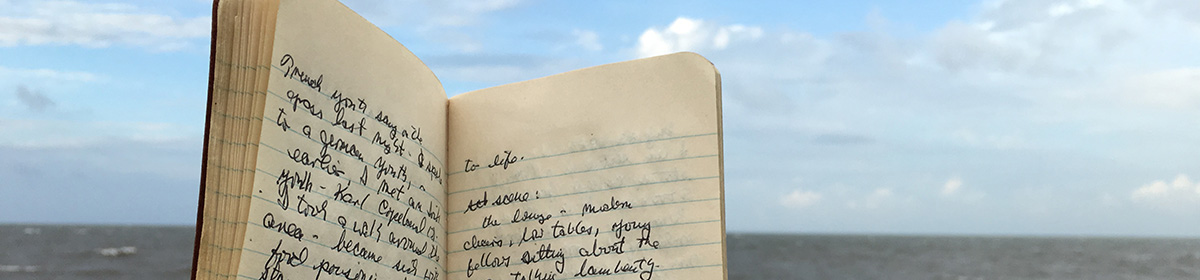
AN OUTERMOST WINTER MOMENT

When I was working as an editorial assistant and occasional free-lance reporter for the Boston Globe back in the early 1970s, a reporter named Ann-Mary Currier, who occupied a desk near mine, wrote a splendid feature story about the little house that then stood along the shoreline on the far reaches of Cape Cod. It was called, Fo’castle, as on a ship. It would later come to be known as The Outermost House and evolve into a naturalist shrine surviving by the open ocean.

The book’s story, more than anything, was about Henry Beston, the 1st World War Navy veteran and nature-lover who moved into the tiny house for an entire year, that year being 1926-27. I don’t believe he built the house, which stood within the town of Eastham.

As I write about the house and Beston, I realize I may have written here about it and him before. No matter, I believe him — and the house — worthy subjects, and regard that year in which Beston lived alone with nature to be especially worth our time.

But when Ann-Mary’s story appeared in the Globe, it was the first I’d heard of either. I’m going to say the year was 1972. She interviewed, as I recall, surviving friends and relatives of Beston, who thought of himself as a writer-naturalist. I also recall a picture of Ann-Mary walking the wild, open stretch of beach with her interview subjects. Those photos appeared along with the story.

Nonetheless, it would be decades before I somehow came to do a televison story about the book, Outermost House, Beston and the society — The Henry Beston Society — that grew up around his book and his legacy.

Beston was a gifted writer who would turn out other books about New England seasons, but nothing remains as famous as Outermost House, published in 1928. A French edition of the book is called, Une Maison au bout du Monde (A House at the End of the World)

Beston spent that year in virtual seclusion making copious notes about everything he observed of the sea and the wildlife and the raw, active nature and impact of the tides encircling and buffeting his outermost locale. It is also a story of a fruitful solitude in what was essentially a two-room white cabin.

What prompted me to write about all this today was a desire, living in a Florida winter of only slightly dipping temperatures and grayer than usual skies in a community of vinyl, tin and wood modular homes, to write about a northern winter. They are having another fierce one up there.

But I also want to share with you a sample of Beston’s prose. Yes, I’ve probably done it before, but was it winter?

There is a chapter called, Midwinter. And Beston writes, after coming out of autumn, about the journey of the sun which he says is a far greater adventure than “(A) year indoors…(and)…”a journey along a paper calendar.

“…a year in outer nature is the accomplishment of a tremendous ritual. To share in it, one must have a knoweldge of the pilgrimages of the sun, and something of that natural sense of him and feeling for him which made even the most primitive people mark the summer limits.”

And so, Henry Beston has personified The Sun. The song writer wrote of Old Devil Moon. In fact, the moon gets lots of ink. I see both sun and moon as also having endearing female qualities — of warmth and nurturing….

But I’m wanderingly stupidly here, ruining things with my prattle. Back to Henry Beston….

“When all has been said,” he writes, “the adventure of the sun is the great natural drama by which we live, and not to have joy in it and awe of it, not to share in it, is to close a dull door on nature’s sustaining and poetic spirit.”

Beston is really no “sun worshiper.” He is — was — obviously just a naturalist- writer with the eye and soul of a poet. And poets see human qualities in everything, or so it has seemed since the time of the Romantics.

And, of the change from a Cape Cod autumn to a Cape winter, most likely in the autumn of 1926, Beston writes, “(T)he splendor of colour in this world of sea and dune ebbed from it like a tide; it shallowed first without seeming to lose ground and presently vanished all at once, almost, so it seemed, in one gray week. Warmth left the sea, and winter came down with storms of rushing wind and icy pelting rain. The first snow fell early in November, just before the dawn of a gray and bitter day.”

Then comes a visit to Outermost House by the postman. Henry certainly welcomed that visit as much as he welcomed the visit of the sun. He gave the postman a letter for mailing. Henry was alone, but, like me, he liked to stay in touch with people.

The postman departs, and he write…

“My fire had gone out, the Fo’castle was raw and cold, but my wood was ready, and I soon had a fire crackling.”

Beston died on April 15, 1968 at the age of 80. The Fo’castle — The Outermost House — was washed into the sea during the Blizzard of 1978. I believe a replica stands in hits place.

The memory of the original house survives, as does Henry Beston’s most original ruminations about his year on what writer Robert Finch (a Beston booster) has described as “that great glacial scarp of Cape Cod’s outer beach.”

Finch has written an eloquent introduction to later editions of the book. If y ou love nature and nature-writing, you’ll want to read his and Beston’s words on a region of my home state that, however drearily and insistently it gets overdeveloped, retains an enduring beauty.