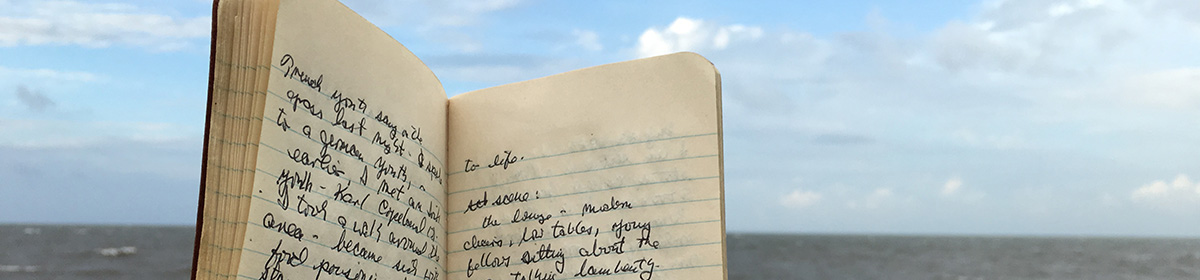
A TOWN WITHOUT SAUCE

Returned to the old town, mill town, never ultimately “home” but home for a long while, but seeming less like home for this moment in time for reasons unclear to me.

Got a steak sub at the local sandwich shop. Had been there a fair number of times before. Didn’t recognize anyone.

Got the sub back to the old neighbor’s house where I was staying and found that it had no sauce on it. None. Just a scumble of beef nestled in plain white bread.

No sauce. No taste. That’s what’s missing in this old town. Maybe it never had any real sauce or taste.

I was sad, trying to remember what the town had tasted like when I was in it. I ate what I could and threw the rest away.

LIKE GLASS

Summer 2024 everything moving quickly, too quickly, toward its outer edges. Chaos, as usual, all around. Sameness. So much sameness. And fear.

I’m thinking of last summer — borne backward, against the current, by easier memories — to when I spent all of July in Upstate New York; Rotterdam Junction, to be precise, in flight from the Florida heat that I could not escape this year.

I had stayed at a friend’s house, just up a steep little protective grassy bluff from the Mohawk River, just down from Lock#9. It is a serene, fairly wide stretch traveled by the occasional cabin cruiser likely bound for the Hudson River where the Mohawk flows into it. There is a grape arbor and a shed by a fence. My friend built a little porch on the shed, facing the river.

There used to be a little boat, if I recall correctly, in a little shaded opening of trees down the slope and near the water’s edge. It was — again, if I recall correctly — gone last year, as was the little pier my friend once had for that boat. Getting on in years, he might have tired of maintaining either, and seldom, if ever got out onto the water for fishing or leisure. But he also could not bring himself to move himself and his wife away from this humble riverside haven where he’d lived happily for so many years.

I’ve never been out on the Mohawk, but loved being near it.

If I were my friend, I couldn’t have moved, either. (He did, in fact, once move to Florida, but wound up selling his mobil home down there for far, far less than its value, and hastening back to the realm of seasons, snow, ice, complex family memories. Back to the river. )

During my month on the river, on a pleasant but unaccountably anxious July evening, I wrote, simply:

The Mohawk tonight, as the light dies.

Good to be near it, to stand on the cool grass

Reflecting, on all that can be shattered.

A life, a river

Like glass.

FIRST VICTORY OF THE DAY

717 A.M. I drove by the Last Mile. There was a light on inside. It looked like it was just the light over the bar. That told me Willy Hartrey was inside. Willy is this old guy that Joe Barron, the owner, gave the key and throws a few dollars to come in and clean in the morning. (Charlie stayed down in Florida this y ear, right through the hot months. Somebody said he’s dealing with some financial issues but refuses to sell either his big place down there or his big place in Nahant up here. He must be feeling the crunch. He swears he’ll never sell the lounge, like it’s a memorial to his family heritage.)

Willy Hartrey lives on a little dead-end street about a block back from the Lounge. It’s the house where he was born. He never married. His parents died, one after the other, way back in the Sixties sometime. I guess by now he might be eighty, maybe older. He’s kind of ageless. He used to work at General Electric in Lynn, retired, then worked for a while with his older brother in a sheet metal shop, just helping him out with the books. The brother moved to Florida, then died. Willy’s sister lived in Melrose, died as well a few years ago.

So, Willy’s alone.

I decided to pull up on the side and pop in and say hello to Willy. The front door was open. Once upon a time some hard luck guys chasing a bad booze addiction would sleep in their cars and come into the Lounge for an eye-opener. Willy would help them out. That would be a little later when the place really opened for business, maybe ten o’clock. Willy never stays around that long now, and those old drunks all disappered, all those guys and a couple of women. It was sad. But Charlie, who was still around in those days, used to feel bad for them. He’d get them help if they’d take it. Get them to rehab or treatment. After they were steady enough, they’d go hang out under the old pavilion on Revere Beach.

Willy was sitting at a table by the hallway to the johns with a cup of coffee in front of him. The place smelled clean. He always made himself a cup of coffee after he was done cleaning. I went over and poured myself a cup, too. That’s kind of the ritual when I drop in like this before business hours and Willy’s on duty. He was sitting there in a flannel shirt and khakis. He’d gotten pretty gray, the hair’s thinning, face and hands a little rough. But he seems to stay about the same weight, a good solid guy, an old 9th Division Army veteran.

The place was clean. Willy probably did all the cleaning before dawn and put away the mop, broom and the rest.

I sat down with him. “How you doing, Willy?”

“How you doing?”

“I asked you first.”

“I’m fine. Now, how about you?”

“I’m fine, too.”

“With you, I know that means. That means you’re not fine.”

“Right. Not fine. Worrying too much. About everything and nothing. You don’t seem to have that problem.”

“Did once, Still do now and then. But today — which is the only day that counts, I’m peaceful. Got a good bill of health down at the V.A yesterday. Taking it all a day at a time. Couple of small things here and there. Grateful, you know what I mean? And this gets me up and going, coming down here, opening up, pulling out the mop and bucket.”

I was honest. I told him I had a lot of anxiety. I told him there was a lot on my mind, a lot on my plate, but maybe a lot of unnecessary worry, too. Some money worries, who doesn’t know about them! But mainly just a lot of decisions that needed to be made that I wasn’t making. Coming to grips, getting business done. The old wobbly Hamlet, Prince of Denmark routine. Procrastinating with a lot of decisions. Some things I want to change but can’t change right now. That’s how I happened to be out early. I was going to go up the beach and walk along the tide line, try to relax.

And the truth is, sitting with Willy can be like a calming day at the beach. He landed at Normandy Beach, second wave. That was hell. But, as he always said, in the first wave, he might have been gone. A lot of guys he knew went in the first wave.

And….Hell! Thinking about that That made me realize Willy just looks eighty. He’d got to be over ninety. Like I say, he seems ageless.

“I tell you what,” Willy said after taking a sip of coffee, which he takes black, like me. “You got to remember the first victory of the day. My mother liked to write poetry, nothing special. Published little things in little religious magazines now and then. She used to go visit this nun in a monastery someplace. This nun wrote books. Spiritual books. She was maybe a little famous in her order, very holy. She used to help mom with her little poems. She told my mom something she never forgot. She told her getting out of bed was the first victory of the day.”

That sounded stupid on it’s face, until I thought about it –honestly. “Funny you should say that,” I said. ” It was tough for me this morning, especially where I wake up a lot in the night.”

“Me, too,” Willy said. “A lot of useless worrying, you know what I mean? I look out the window, I look out at the yard, dark everywhere, quiet except maybe for a train whistle far off or some wind in the trees. I think for a couple of minutes, really drowsy, then I put my head down and I go back to sleep. I know the vicory is coming — when I rise. I’ll rise as long as I can rise and the day I don’t rise, well the battle’s over.

“But just remember, good buddy, about that little victory tomorrow. It’s too late today. You’re up and already feeling beat down, not even knowing you got a victory under belt.”

“Well, since I’m not working anymore, I do tend to sleep in.”

“Don’t do it, buddy. Make like you gotta get off that landing craft and hit the beach, no matter what.”

“Whoa, that’s kind of tough. I prefer to think of just getting out of bed.”

“Okay, well then. But think of it this way — you’re in a monastery and you got to be up and down in the chapel praying. Praying hard. That’s another battle.

“That’s easier for sure. I can just pray right where I am. That’s easy.”

“Not really, buddy. Prayer is work if you do it right. You gotta be a prayer warrior. That’s what all the other warriors tell me. You rise up, which is your duty as long as you’re alive. And when you put your feet down on that cold floor, just make like its the sands of Normandy, buddy, and that’s your first victory of the day. Then start praying.”

“I guess, they’ll be shooting at me,” I said, chuckling, “if my bed is a damn Higgins boat.”

At this point, I’m thinking Willy’s a little crazy. Everybody says he’s a little crazy from the war, but everybody likes him and nobody ever really sees much of him because after he cleans up the Lounge, he kind of disappears in daylight, like a ghost.

“I’ll have your back, buddy. I’ll be right behind you, running up that beach, praying hard. You won’t see me, but I’m there.”

Willy said that like his prayers were rifles. Which for him, I guess they are.”

We finished off our coffees, chatted a little more, but mostly just sat thinking and, maybe, praying.

And so it went this morning at the Last Mile with Willy Hartrey. I’ve got to watch for that light on inside next time I drive the Lounge. I’ll go in, see him sitting there, a ghost made visible until full daylight, and I’ll tell him I just had my first victory of the day.

I’ll tell him that, and a whole bunch of things. Willy’s good company.

THE STORM, A FRENZIED DRUM…


It’s here. It’s dark. The wind, so much wind. Rain, constant rain….

A lake has formed out back where the grass dips into a swale. Water in the street. There was, briefly, a tornado warning. Seems a water spout might have moved on shore. It dissipated, happily.

That was not that close to us, but it might have been moving this way.

Those were uneasy moments.

Storms can urge you think, not alone of thepresent danger, but of the future — of this house, the people and the animal in it. Of life in Florida. Of children.

And in 1919, W.B. Yeats wrote, amid the storm,

A Prayer For My Daughter

Once more the storm is howling, and half hid

Under this cradle-hood and cover lid

My child sleeps on. There is no obstacle

But Gregory’s wood and one bare hill

Whereby the haystack-and roof-leveling wind,

Bred on the Atlantic, can be stayed;

And for an hour I have walked and prayed

Because of the great gloom that is in my mind.

He continues….

I have walked and prayed for this young child an hour

And heard the sea-wind scream upon the tower,

And under the arches of the bridge, and scream

In the Elms above the flooded stream;

Imagining in excited reverie

That the future years had come,

Dancing to a frenzied drum,

Out of the murderous innocence of the sea.

Yeat’s daughter Anne was a sickly child, but she became a painter, constume and stage designer and lived until age 82 and died on July 4, 2001. As such, the poet’s prayers amid the howling storm were answered. His daughter lived a long and apparently happy life. Yeats died January 28, 1939 at age 73. Another storm was brewing then — in Europe. But then, if I’m to continue, I’d have to get into Yeat’s complicated politics, and complicated life, which mingles with the stormy history of the 20th Century — which his daughter managed, from those infant moments in 1919, to live well beyond — dying before the 21st Century Age of Terror began in earnest at 8:46 a.m., September 11, 2001

It is 9:25 on this Sunday night, and THE TELEVISION IS BLARING ANOTHER LOUD, URGENT ROBOTIC VOICE telling us that four-to-eight inches of rain have fallen and flash flooding is imminent. The announcement is interrupting the televison drama Diane was watching for comfort and escape from all the nerve-shattering danger abroad in the air. She yells at the TV in frustration. PLEASE STOP!

I hear either thunder, or the tin roof bobbing in the gale. Will the power fail? Bringing silence? No escape?

Call this A Prayer For Us All, agitated and menaced by tropical turbulence whipping empty streets of wildly dancing palms and bobbing street lights. And here we sit in the most fragile of tin and vinyl domiciles.

THE LOUD ROBOTIC VOICE AGAIN, THIS TIME ANNOUNCING A TORNADO WARNING TO THE SOUTH AROUND SARASOTA. “DON’T WAIT TO HEAR A TORNADO,” THE VOICE SAYS. “TAKE COVER NOW.”

Where, people down there must be asking?

The dog, at least, seems calm, under the influence of CBD Cheese Bites.

Weather bites tonight.

Poetry sooths.

O that we could be in Gregory’s Wood now, where it’s probably calm.

But then, Yeats was writing in a time of violence political turbulence.

So am I.

But we still have power.

And the power of prayer in troubled times.

(THE INTERNET FAILED JUST AS I POSTED THIS)

THE CALM BEFORE THE STORM

That’s not a metaphor. There is a storm coming, meteorological not political in nature.

And it is calm out there. Now, anyway, at 3:57 p.m.

This will be a tropical storm, brewed up over very warm; far away tropical waters. It will march north and west and then, who knows? It is like a witchy homeless soul, looking for a place to sit and complain while forcing us to listen and get wet or run away, far away, to where it’s dry and will remain calm.

That would be very far away tonight. Too far.

I must take down the red trellis I set up out back to bear hanging flower. It has blown down before. There will likely be wind, perhaps a lot of it.

I look out back and see, at mid-afternoon, the trellis proudly standing, the grackles, sparrows, bluejays and a female cardinal busy at the feeders, fluttering and alighting and contending at each little seeded aperture.

Do they know there is bad, wet, damaging weather coming? Is this last-minute shopping on their part? I get the sense birds can foretell everything of an atmospheric nature, even if it’s far away. And they can fly away –or hunker in trees. But they will get wet. It can’t be pleasent for them, either. Bad wind can break a wing, blow them to the ground.

In this neighborhood, there are egrets, ibis, woodstorks and moscovey ducks in great numbers. What are they up to now? Conferring, perhaps, about the coming weather.

Bird knowledge at this hour of anticipation would be fascinting to tap into. I sit on the west coast of Florida, as you may already know. The storm is working its way toward the Gulf of Mexico. It could be relatively mild; could be severe. That’s weather for you. Wild in temperment, unpredictable in nature, like the most capricious of gods. Like that old homeless soul, destined to just dissolve somewhere overland as if she never were.

Rain. There will be lots of rain. We’ve been assured of that.

It will be heaviest in the dark when it can be mosts frightening — that incessant wind-driven pounding on the roof and splashing of rainwater rushing out of the neighbor’s drain pipe. And I’ll wonder, will something fail? some part of the roof? Some window….? Am I safe? Are my belonging safe?

That’s weather for you. And the rain….

Torrential, and of long endurance. Perhaps as much as nine inches will fall on already saturated ground. There has been a great deal of rain lately, coming on rolling thunder, mostly though not always in the late afternoon. those massive Florida clouds building up like mountains, then the light dimming to silver-gray. The the thunder begins, gets louder and louder, and closer. The rain starts.

And I always think: well, how about those memories of Florida summer’s past? Is it possible I’ve spent so much of my life down here where I always feel l ike a visitor?

But often, I want the freedom of a bird to fly away from it. ( Yeah, be a “snowbird.” But when you move to Florida, you can’t be a “tropical storm bird.” It’s grin and bear it.

But…

Why am I in a kind of weather mailaise? It is cocktail of anxiety, dismay, darts of fear, like little jolts to the head and heart — and boredom. Weather happens. Ho-hum. Get used to it. Get used to life.

But will my house be damaged? Will I lose precious things? One is always inclined to ask oneself those things in a Florida summers. And, to a large measure, you are helpless. What comes, comes. You can’t do anything about it.

At least it’s not a hurricane.

In Florida, you DO fear weather in summer — the threat of damaging winds, of storm surges, though I am safely far from the coast. Those coastal area have been warned of a likely surge — and of likely flooding.

I might go north several miles to a friends just to break the isolation, but I am reluctant to leave this place and then have to wonder, is everything here safe?

And I could use a little isolation. A little solitude.

My little dog is terrified of thunder. Lately, CBD tabs seem to be calming her. Thanks for that. Hemp for dogs.

And we have slipped into August.

August makes me sad, even early August. I like to be at the beginning or the middle of things, not the beginning of the end, which is what August is for summer. And in Florida, August brings the higher probability of serious storms, even hurricanes. Hurricanes can be the end.

Let me stop there, anxious, feeling displaced.

Let’s go take care of the trellis.

DRIFTING MOUNTAIN CLOUDS

This was around 1996. Probably the fall.

I was sitting in the small library of little Lees-McCrea College in the Blue Ridge Mountains of North Carolina in the town of Banner Elk. I was just browsing, using up some time. I’ll always go in search of a library. A college library, however small, is usually rich in the better books and even richer periodicals. Under the best of circumstances, libraries are still quiet places. This one was quiet. Maybe I would learn something. I was doing a lot of thinking, too.

I was also in between broadcast jobs, thinking of leaving the business, uncertain of my next move. I’d traveled up from Florda after leaving my TV job there, and was halfway back to what I will always call home — Massachusetts, especially Boston, for better or worse. I was living with a group of people (long story) and working at a little radio station which I liked, but being required to sell advertisement in addition to being on the air. I didn’t like visiting merchants and auto dealers selling ads. I like meeting people –especially Southern people — but didn’t like or feel competent about figuring out how to convince them to spend money, then write up a contract.

Suddenly, as I sat reading and thinking, what appeared to be smoke began drifting by the window and between the library building and the neighboring campus building. For a fraction of a second, I was alarmed -but then, consoled and quietly beguiled.

For this was not smoke. These were clouds. None of the few other people in the library seemed to think the sight unusual. We were in the mountains, after all, high up among some low drifting clouds. I suddenly loved that peculiar reality, and those white ephemeral phantoms. I began to think pleasant mountain thoughts.

But my bright thoughts, at any moment, illuminated, as by the sun, often darken. Moods, like dark clouds, can drift across and block the sunshine. It was true at that moment, true always. Nostalgia, too, (in which I’m indulging now) can turn sorrowful, especially over memories of wasted time. I’ve wasted a lot of time since that day, and squandered a great deal of mental and emotional resources that should have gone into writing. (Facebook and blogs did not exist then, and are still not the best forums – or fora – for a true, which is to say, “professional” writer.)

That cloud-hidden moment was around the month I turned fifty. It was mid-life and, since I’d started my broadcast career late( at thirty-two) I was more or less at mid-career (though I’d put in prior years as a newspaper reporter).

I’d ultmately work until right around my 69th birthday in 2015. That was in the future.

But at that moment in that little college library, I wasn’t even sure I’d resume my broadcast career. I wasn’t sure what I was going to do. I knew I couldn’t stay in the mountains, among the clouds, barely getting by on the salary of a tiny mountain radio station located in a tripple-wide trailer. (Yes, it was fun, but it wasn’t the time to make a career of it.)

Either during that library visit or on another day peacefully among the stacks, I’d been reading about the writer Flannery O’Connor — about how she’d “accepted” her vocation as a writer — not easy for her, wracked by the degenerative disease lupus and destined to die at age 39.

I had pondered what it means to “accept” one’s vocation, even when it’s difficult, but when it nonetheless feels like the only path to fulfillment, or what analysts call self-actualization (whatever that means). I had read of many writers saying this about their “vocation”–that it felt like accepting its joys and burdens was the only life path forward. That’s doubtless true of any vocation, but writers of any genre at any level often speak of the trial of filling that white blank space before them out of the sometimes meager resources of their imagination or memory, nonetheless feeling compelled to do so. I once heard the writer Catherine Anne Porter, during an interview, say she’d often felt she’d have been much happier with another vocation and more than once vowed to give up writing –only to find herself writing out that vow. Jessamyn West wrote that good days practicing her craft were like heavenly bliss, while bad days were equivalent to working off any punishment she might have earned with her sins. Sports writer Red Smith famously said, with beautiful sarcasm, that writing wasn’t difficult; you just sat in front of the blank page and opened a vein.

One can too easily exaggerate those difficulties — to oneself or to others. It’s a cheap excuse for giving up.

And a writer might work forever in obscurity. Franz Kafka asked a friend to burn all his writings, many of them incomplete, after he died. Fortnately, the friend did not honor that promise.

On or about that mountain day, meditating among drifting clouds, I learned very belatedly about the necessity of “accepting” a writer’s vocation, even though I might die before I got any good at it, or got any readers.

But soon thereafter, I continued my journey north and resumed my broadcast career and mostly neglected this true vocation, making it into an occasional avocation. TV news writing was easy. Real writing is hard.

Now, in what little time is left, I must “accept” my writer’s vocation. I might even enjoy it.

And I will be grateful for that brief moment of illumination, beguiled and consoled among drifting clouds by my drifting thoughts at 3700 feet above sea level.

And I must write.

ONCE UPON A CHILDHOOD…

Schnectady Union-Star, November 23, 1954:

Mrs. C. D. Livingston, 952 Wendell Ave., entertained Saturday afternoon in honor of the ninth birthday of her daughter Diane.

Tommy Atkins entertained with puppets “Magic” and her two ventriloquial friends, “Cookie and Oogle.”

Guests were Marnie Morris, Kathy Vinick, Emmy Tischler, Ceil Cummings, Donna Cole, Peggy MacAndrew, Maxine Dehncke, Enid Hart, Eileen Casell, Betty Lou Ragland, Elain Cramer, Elaine Fifield, Anne Gates and Diane Durante.

The two-story brick house at 952 Wendell Avenue stands occupied but freyed from the urban life that has circled and gnawed away at it for seventy years. As a brick dwelling, it has done better than many. It has two spacious front porches with nice railings.

Schenectady, New York is a hard scrabble box of memories — The Electric City for its General Electric association. G.E. and its steam turbine division have dwindled to an iconic brick building and a sprawling, mostly empty parking lot.

Tiime rushing in a torrent along the Mohawk River.

I’ve driven by that house on Wendell Avenue in sunlight and shadow, in all seasons — Diane has pointed it out to me — driven up the gentle hill that is that sidestreet toward a main street — the street and neighborhood having slowly gone to seed.

Diane Livingston became Diane Harrison in 1963, pregnant at 17, mother ultimately of four children by David Harrison. The other little girls…she knows the fate of some, not of others. Not of Tommy Atkins.

There are home movies of that November day, shadowy, puppeteer Tommy Atkins? It is a woman, an elegant woman, the puppets floppy, silly and delightful, talking. Tommy’s lips move barely perceptibly. The movies are silent, the girls delighted, their small voices only imagined, shy before the camera, all dressed up by their mothers.

Mrs. C.D. Livingston died in 1999.

One of the girls, Marnie, became a ballarina in New York City.

The sweet, aching dance of time.

Out of Childhood.

Away from Innocence.

Diane turned nine on November 26, 1954

I turned eight the next day.

So we beat on, boats against the current, borne back ceaselessly into the past.

-F.C. Fitzgerald, 1925

UNANSWERED “NEWS” TIP

This is about a letter from a man ‘alleging to have information,’ as the saying goes. It was an unknown man –likely an old man. The man, forever nameless, the moment, forever lost, have been on my mind lately — for some unknown reason.

It goes back to a letter I received one day in the mid-Seventies. I was the Norwood Bureau reporter for the fledgling Daily Transcript suburban Boston newspaper. It, too, has been lost. About fifteen years ago, it vanished. It began in the early 1970s by collapsing four suburban weekies into one daily newspaper. Having never totally caught on with the reading public, struggling along lamely for years, it finally was converted into a weekly serving a far smaller area – and may, for all I know, have vanished altogether by now. Newspapers, in our time, regularly shrink or die. So it goes.

As the newest daily in the Boston area, the Transcript didn’t get a lot of attention. The residents of those four towns had resented the loss of their beloved weekly newspapers with their exclusive focus on their towns’ news. And their local news was thinned out in order to squeeze in the news of neighboring towns about which they cared little or not at all.

The towns were Dedham, Norwood, Westwood and Needham, all in southwest suburban Boston.

Back to that letter:

I forget if it was addressed exclusively to me. It would have been nice to know some reader was paying attention exclusively to my by-line.

But–it was more likely addressed to the Bureau office on Washington Street.

I think it came from one of the town’s nursing homes. This might automatically prompt some editors to dismiss it, suspecing it came from some soul suffereing dementia. The writer was, indeed, a resident in that nursing facility. The letter is lost but, as I recall, its author wrote, in longhand, something like this:

Dear Editor (or Reporter), I have some information I believe is newsworthy and that you might find very interesting. Please excuse my handwriting — I’ve got a touch of arthritis. But you can reach me at (was there a phone number? Just an address? Just his name ( forgotten) along with the name of the nursing home? Don’t remember.

I just know that I somehow felt, way back then, that I should “check this out,” as they say. I just had — a sense. It might have been sympathy for the hopelessly obscure of all “senior” facilities languishing away — and w riting unasnwered letters to editors.

Nonetheless, I felt I should check it out for two reasons: first, the writer, whom I believe was a male, might actually have something newsworthy to tell me. There was always that possibility, though the multitude of news tips go nowhere, r egardless of their source. Second: it’s not nice to ignore an elderly person looking for attention and maybe just a little company.

But also, how many times in my career as a reporter did I or other reporters or editors fail to follow up on a request for coverage of something or other–that turned out to be legitimate and important? Innumerable times, no doubt, during the busy course of multitudes of spinning news cycles in the history of the busy earth!

In truth, I suspected it wasn’t a “news” tip, as such, at all. I wondered if it was just one of those fabulous stories of the kind the elderly stand ready to pass on about their participation or involvement in some epical moment in Massachusetts, America, World, or just Personal History.

Everybody has a story.

If one lets one’s imagination range, the possibilities are infinite….

Perhaps this fellow was present when they exploded the Atom Bomb and saw some terrible flaw in the design andplanning that would one day, if left uncorrected, end civilization. Maybe he was a shadow Oppenheimer.

Perhaps he knew the identity of the men behind the deadly 1920 payroll robbery that got Sacco and Venzetti — innocent and, in the minds of millions across the globe, falsely accused — sent to the electric chair.

Perhaps he was a retired doctor who’d been a personal physician to H0ward Hughes.

Perhaps he WAS Howard Hughes.

Perhaps he was the doctor who delivered Elvis.

Perhaps he had good informtation about the whereabouts of Amelia Earhart and her plane.

Perhaps he had secret information about the Kennedy assassination. (Who doesn’t?)

Perhaps he knew the location of illegal uranium deposits and other nuclear waste buried under a nearby residential neighborhood.

Perhaps he was the grandson of a Scotland Yard Detective and had irrefutable, long hidden DNA evidence about the identity of Jack the Ripper.

Perhaps he played football with Jim Thorpe

Perhaps he’d once been a drummer for The Rolling Stones.

Perhaps he was a scientist whose theories about the causes of cancer had been unjustly supressed by a major medical institute.

Perhaps he was just an old man with nothing special for me, but who would have been delightful by a visit — from anyone! Especially a reporter.

Considering that, about that same period of time, I managed to respond to a call from excited Norwood parents who insisted their little daughters, currently trading off bouncing a ball in their backyard, were bound and determined to break the Guinness Book of Records for the number of hours spent bouncing a ball. Consider the absurd fact that I actually found time to write a dumb story about that utterly quixotic, silly parentallly-generated endeavor ( I don’t recall if the bouncing continued even past sundown).

Certainly, considering this, I could have found time to visit this poor man even if just pretending to check out his tip. I could have brought him an ice cream.

But I didn’t. The moment, the man, my reporter’s career, and whatever this guy had to tell me and whatever his human needs — are all long gone.

But, I’ll probably always wonder — if I should happen to hear of the collapse of a generations-old Norwood building with a long-ignored construction flaw, or the long-standing, long concealed poisoning of a Norwood water source due to the action of 1970s engineers, or the investigation and prosecution of individuals behind a decades-long suburban nursing home scam — or (why not?) the discovery that the illigitimate son of a member of the British Royal family lived out his last days in a Norwood nursing home — yes, I’ll always wonder…..

The moral:

Never as a reporter totally ignore even the most dubious news tip.

More importantly, never ignore the elderly and their stories.

And whoever you were, Mister I’ve-Got-Something-That-May-Interest-You, please forgive me. Your story probably died with you.

Or maybe, after being ignored, you simply wrote instead to the Patriot Ledger, the Boston Globe, The Boston Herald — or even the New York Times….and you had a huge story.! Huge!

No, not likely.

Whatever.

Wherever you are, whoever you were, these dozens of words are in your memory.

NIGHTHAWKS

Sunday night, 10:20, The Last Mile Lounge. Tash Silva’s at the bar. Deano’s night off. Tash is keeping an eye on Jimmy Jammin, a chronic tipler. But Jimmy’s not drinking tonight. I heard him tell Tash he hasn’t had a drink in three months. No alcohol. He’s drinking ginger ale. He’s here for the company. He’s talking to Bill Kirner, a regular. Kenny Foy is here with a guy I haven’t seen before, sitting at a table near the front door. Two guys at the end of the bar, strangers, are playing Keno. We’re all kind of strangers tonight. There are only three booths, only one of them in occupied — by two women. I’ve seen them before. They work at concessions at the airport and stop in after work. They have beers. Athena, the real estate agent from Lowell is here. Strange, on a Sunday night. She’s drinking a Manhattan. I can see the brown water and the cherry. She’s with a guy, probably a date. I’ll bet they stopped in on their way back from a movie in Boston. She does that, comes here at odd times, likes it here for some reason, though not a big drinker. She had that little revelation several months back. Seemed to change her. (I wish I could change.) She suddenly lost her depression, which might be why she comes back here, the scene of the loss of something bad, like somebody flipped a switch in her head.

The juke box is working again. But tonight, it’s silence. Nobody’s touched it. Everybody is silent, no laughter, you can barely hear anybody talking. The TV over the bar is off.

Knox, the artist who lives upstairs is at a table in the middle of the room, drawing something on sheets of paper.

There are seven tables. But, as you know, this is a small place, the Last Mile.

I’m alone at a table by the side door. I’m not sure why I came by tonight. I’m drinking a cup of hot green tea. Yeah, I know. Strange. Tash made it for me. I’d been drinking ice water, believe it or not. I tip Tash, no matter what I drink. He says to me, handing me the cup, “good night for tea.”

The light is soft. They made that change in this place. No harsh lighting.

And I’m thinking. I’m meditating, really. I’ve stepped out the side door, looking down the street toward the beach. I hear the wind. The jet goes over headed for Logan. I hear a siren, then – silence.

I need this silence. I need a moment to look at the windows of houses, soft rectangles of light, some dark. The street wet. There has been savage weather in the nation but here along the coast –just a damp, shining street.

And I’m thinking, meditating, trying to think. Getting a little chilly, I go back inside. My jacket is over the chair. No one will join me. Everybody wants to be unjoined tonight, except maybe Jim and Bill at the bar — and they aren’t talking anymore. Tash is reading a magazine, leaning up against the wall behind the bar.

Knox, the artist, looks up for a second, looks at me, smiles. We talk from time to time. He looks around then. I wonder — is he drawing this scene? Will he paint it later? Make it permanent.

The wet, shining, empty street. He can paint that if he looks out there…but in here, this is the painting. Paint the silence. Paint the light, the people…but make us see the silence.

I hear a breeze out there. A wind off the ocean. It grips the place.

I am full of fear, worry, why? Nothing to worry about. Or — so much to worry about but, why worry?

I look at my watch. It is now 10:37 p.m. And then I remember: The old clock over the old phone booth in the corner stopped at 10:37, either a.m or p.m., on some lost day in some lost month many lost years ago here at The Last Mile.

I stare at it, at stopped time, which is now exactly this time — stopped. I hear the damp wind.

The old bar glass of ice water is still on the table before me with the tea cup. The ice is mostly melted. It’s just a still, clear, half-full beeker of chrystal brightness now. I sip the hot green tea.

A Sunday night in silence. The tea is still steaming.

In stopped time. Steam and still water and memories —

before and all about me.

I half dream. For a full minute, I am fully — at peace.